High-Performance Thin Titanium Foil: Advanced Material Solution for Industrial Applications

Get a Free Quote

Our representative will contact you soon.
Email
Name
Company Name
Message
0/1000

thin titanium foil

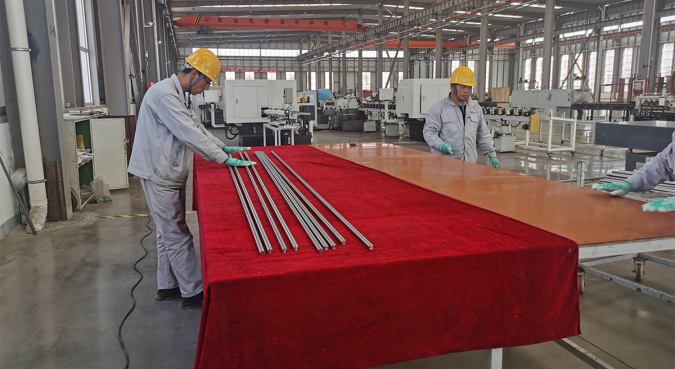
Thin titanium foil represents a remarkable advancement in materials engineering, offering an exceptional combination of strength, lightweight properties, and versatility. This high-performance material, typically ranging from 0.001 to 0.1mm in thickness, demonstrates superior corrosion resistance and maintains structural integrity across extreme temperature ranges. The foil's unique atomic structure allows for excellent formability while retaining titanium's inherent strength, making it ideal for various industrial applications. In aerospace engineering, thin titanium foil serves as a critical component in thermal protection systems and lightweight structural elements. The medical industry utilizes it for implant manufacturing and surgical instruments due to its biocompatibility and sterility. In chemical processing, the foil's exceptional resistance to corrosive environments makes it invaluable for filters and heat exchangers. The manufacturing process involves precise rolling techniques that ensure uniform thickness and surface quality, while maintaining the material's crystalline structure. Modern production methods have enabled the development of increasingly thinner foils without compromising their mechanical properties, opening new possibilities in miniaturization and efficiency improvements across multiple industries.

New Products

Thin titanium foil offers numerous compelling advantages that make it an exceptional choice for various applications. Its remarkable strength-to-weight ratio stands out as a primary benefit, providing robust mechanical properties while maintaining minimal mass, crucial for weight-sensitive applications. The material's natural formation of a protective oxide layer ensures outstanding corrosion resistance, eliminating the need for additional protective coatings and reducing long-term maintenance costs. In terms of thermal properties, thin titanium foil exhibits excellent heat distribution and resistance to thermal cycling, making it ideal for heat exchanger applications and thermal management systems. The foil's biocompatibility presents a significant advantage in medical applications, as it doesn't trigger adverse reactions when in contact with human tissue. Its formability allows for complex shapes and designs while maintaining structural integrity, enabling innovative solutions in product development. The material's high fatigue strength ensures longevity and reliability in dynamic applications, reducing replacement frequency and associated costs. Environmental resistance extends beyond corrosion to include exceptional performance in extreme temperatures and hostile chemical environments. The foil's ability to maintain its properties across a wide temperature range makes it versatile for various operating conditions. Additionally, its recyclability and long service life contribute to sustainability efforts, making it an environmentally responsible choice for modern applications.

Tips And Tricks

About titanium

19

Sep

About titanium

View More
How to ensure the purity of a titanium bar?

19

Sep

How to ensure the purity of a titanium bar?

View More
What is the Difference Between Gr2 and Gr5 Titanium?

19

Sep

What is the Difference Between Gr2 and Gr5 Titanium?

View More
Difference between ASTM F67 and ASTM F136

19

Sep

Difference between ASTM F67 and ASTM F136

View More

Get a Free Quote

Our representative will contact you soon.
Email
Name
Company Name
Message
0/1000

thin titanium foil

Superior Mechanical Properties and Durability

Superior Mechanical Properties and Durability

Thin titanium foil exhibits exceptional mechanical properties that set it apart in the materials engineering field. The unique combination of high tensile strength and low density results in a strength-to-weight ratio that surpasses many conventional materials. This characteristic enables the design of lightweight yet robust structures, particularly beneficial in aerospace and automotive applications. The foil's crystalline structure, carefully preserved during manufacturing, contributes to its outstanding fatigue resistance, allowing it to withstand repeated stress cycles without degradation. The material's elastic properties enable it to return to its original shape after deformation within its elastic limit, making it ideal for applications requiring flexible yet durable components. Furthermore, the foil's ability to maintain these properties across a wide temperature range ensures reliable performance in diverse operating conditions.
Enhanced Corrosion Resistance and Chemical Stability

Enhanced Corrosion Resistance and Chemical Stability

The exceptional corrosion resistance of thin titanium foil stems from its ability to form a stable, self-healing oxide layer upon exposure to air or moisture. This natural protection mechanism provides outstanding resistance to various corrosive environments, including saltwater, acids, and industrial chemicals. The passive oxide layer reforms immediately if damaged, ensuring continuous protection throughout the material's service life. This inherent stability eliminates the need for additional protective coatings, reducing both initial costs and maintenance requirements. The foil's chemical inertness makes it particularly valuable in applications where material purity is crucial, such as semiconductor manufacturing and medical devices. Its stability in aggressive chemical environments extends its applicability to chemical processing equipment and laboratory apparatus.
Versatile Processing and Application Flexibility

Versatile Processing and Application Flexibility

Thin titanium foil's processing versatility opens up numerous possibilities in manufacturing and application design. The material can be formed, welded, and machined using conventional techniques, allowing for efficient integration into existing production processes. Its excellent formability enables the creation of complex geometries while maintaining structural integrity, essential for specialized components in aerospace and medical applications. The foil can be joined through various welding methods, including laser and resistance welding, producing strong, reliable connections. Surface treatments can be applied to enhance specific properties, such as improved wear resistance or modified surface energy. The material's compatibility with different finishing techniques allows for customization to meet specific application requirements, while its consistent quality and dimensional stability ensure reliable performance in precision applications.

Get a Free Quote

Our representative will contact you soon.
Email
Name
Company Name
Message
0/1000