 EN
EN


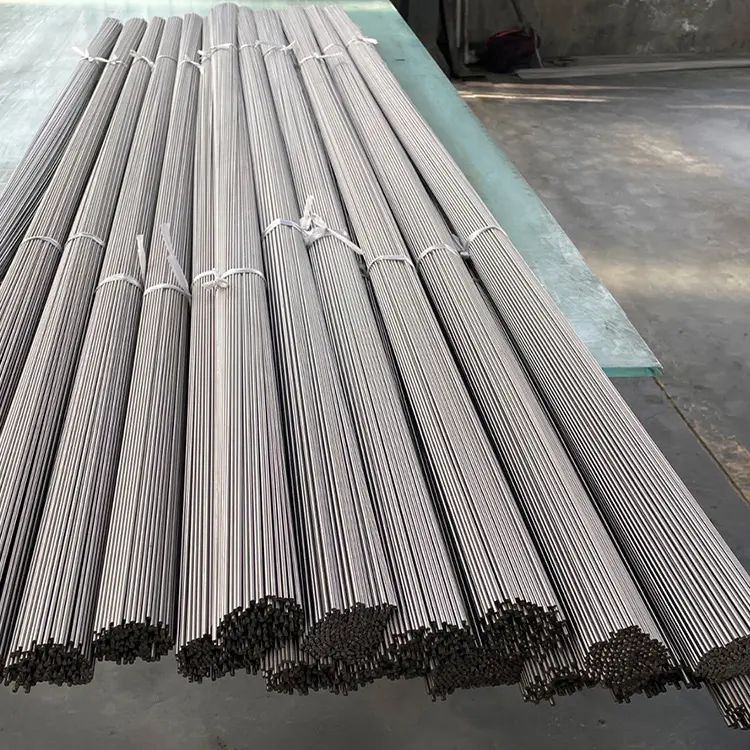
Selecting the right titanium bar grade for industrial applications requires a comprehensive understanding of material properties, performance characteristics, and specific project requirements. Industrial engineers and procurement specialists face numerous challenges when navigating the complex landscape of titanium alloys, each offering distinct advantages for different operational environments. The decision-making process involves evaluating factors such as corrosion resistance, mechanical strength, temperature tolerance, and cost-effectiveness to ensure optimal performance in demanding industrial settings.
Understanding Titanium Grade Classifications
Commercial Pure Titanium Grades
Commercial pure titanium represents the foundation of titanium bar applications across various industries. These grades, typically ranging from Grade 1 to Grade 4, offer excellent corrosion resistance and biocompatibility while maintaining relatively lower mechanical strength compared to alloyed variants. Grade 1 titanium bars provide the highest corrosion resistance and formability, making them ideal for chemical processing equipment and medical implants. Grade 2, often considered the workhorse of commercial pure titanium, strikes an optimal balance between strength and corrosion resistance for general industrial applications.
Grade 3 and Grade 4 commercial pure titanium bars deliver progressively higher strength levels while maintaining excellent corrosion resistance properties. These grades find extensive use in aerospace components, marine hardware, and architectural applications where moderate strength requirements must be met. The selection between these grades depends primarily on the specific mechanical property requirements and the operating environment conditions that the titanium bar will encounter during service life.
Alpha and Near-Alpha Alloys
Alpha titanium alloys contain aluminum as the primary alloying element, along with other alpha stabilizers such as tin and zirconium. These alloys exhibit excellent high-temperature properties, superior creep resistance, and exceptional weldability characteristics. Ti-5Al-2.5Sn represents a popular alpha alloy used in aerospace applications where elevated temperature performance is critical. The microstructure of alpha alloys remains stable at high temperatures, making them suitable for jet engine components and industrial heat exchangers.
Near-alpha alloys incorporate small amounts of beta stabilizing elements to enhance room temperature strength while retaining the beneficial high-temperature properties of alpha alloys. Ti-8Al-1Mo-1V exemplifies this category, offering improved strength-to-weight ratios for demanding structural applications. These titanium bar grades provide excellent fatigue resistance and thermal stability, making them preferred choices for rotating machinery components and high-performance industrial equipment operating under cyclic loading conditions.
Beta and Alpha-Beta Titanium Alloys
Beta Titanium Characteristics
Beta titanium alloys contain sufficient quantities of beta stabilizing elements such as molybdenum, vanadium, and chromium to retain the beta phase at room temperature. These alloys demonstrate exceptional hardenability, allowing for significant strength improvements through heat treatment processes. Ti-10V-2Fe-3Al represents a metastable beta alloy that can achieve extremely high strength levels through appropriate aging treatments. Beta alloys offer superior cold workability compared to alpha alloys, enabling complex forming operations and precision machining.
The unique microstructural characteristics of beta titanium bars provide enhanced fracture toughness and improved damage tolerance capabilities. These properties make beta alloys particularly suitable for critical structural components in aerospace and defense applications. The ability to achieve strength levels exceeding 1400 MPa through proper heat treatment makes beta titanium bars attractive for weight-critical applications where maximum specific strength is required.
Alpha-Beta Alloy Versatility
Alpha-beta titanium alloys represent the most widely used category of titanium bar materials in industrial applications. Ti-6Al-4V, the most common titanium alloy, exemplifies the balanced properties achievable through dual-phase microstructures. This grade combines the beneficial characteristics of both alpha and beta phases, providing excellent strength, moderate ductility, and good corrosion resistance across a wide range of operating conditions.
The versatility of alpha-beta alloys extends to their heat treatment response, allowing for tailored mechanical properties through controlled cooling rates and aging treatments. Ti-6Al-6V-2Sn and Ti-6Al-2Sn-4Zr-6Mo represent higher-strength variants that maintain the processing advantages of the alpha-beta system while delivering enhanced performance characteristics. These alloys find applications in demanding environments such as offshore oil platforms, chemical processing vessels, and high-performance automotive components.
Material Selection Criteria
Mechanical Property Requirements
Evaluating mechanical property requirements forms the cornerstone of effective titanium bar selection for industrial applications. Tensile strength, yield strength, and elongation values must align with anticipated loading conditions and safety factors. Applications involving static loading may prioritize yield strength, while dynamic loading scenarios require careful consideration of fatigue properties and crack propagation resistance. The modulus of elasticity, approximately 114 GPa for most titanium alloys, influences deflection calculations and structural stiffness requirements.
Fracture toughness becomes critical in applications where crack initiation and propagation could lead to catastrophic failure. Beta and alpha-beta titanium bars generally exhibit superior fracture toughness compared to commercial pure grades, making them suitable for pressure vessels and structural components. Creep resistance assumes importance in elevated temperature applications, where alpha and near-alpha alloys demonstrate superior long-term stability under sustained loading conditions.
Environmental Compatibility
Environmental factors significantly influence titanium bar grade selection, particularly regarding corrosion resistance and temperature stability. Commercial pure titanium grades excel in highly corrosive environments, including exposure to chlorides, acids, and seawater. The formation of a stable oxide layer provides exceptional protection against uniform corrosion, while the absence of alloying elements minimizes galvanic corrosion risks in multi-material assemblies.
Temperature considerations encompass both maximum operating temperatures and thermal cycling effects. Alpha alloys maintain strength and dimensional stability at elevated temperatures, making them suitable for heat exchanger tubes and furnace components. Conversely, beta alloys may experience strength degradation at elevated temperatures but offer superior performance in cryogenic applications. Thermal expansion coefficients and thermal conductivity values influence thermal stress development and heat dissipation requirements in temperature-sensitive applications.
Cost-Performance Optimization
Material Cost Analysis
Titanium bar procurement costs vary significantly based on grade complexity, availability, and market conditions. Commercial pure titanium grades typically represent the most economical option for applications where high strength is not required. The manufacturing processes for pure titanium are relatively straightforward, resulting in lower material costs and wider availability from multiple suppliers. However, the lower strength-to-weight ratio may necessitate larger cross-sections, potentially offsetting initial material savings.
Alloyed titanium grades command premium pricing due to complex melting processes, controlled chemistry requirements, and specialized processing techniques. Ti-6Al-4V pricing reflects its widespread use and established supply chains, while exotic alloys such as Ti-6Al-2Sn-4Zr-6Mo carry significant cost premiums. Long-term cost considerations must include maintenance requirements, service life expectations, and replacement costs to develop comprehensive economic evaluations for titanium bar selection.
Performance-Based Value Assessment
Performance-based value assessment requires quantifying the relationship between material properties and operational benefits. Superior corrosion resistance translates to reduced maintenance intervals, lower inspection costs, and extended service life. High strength-to-weight ratios enable design optimization, reducing supporting structure requirements and overall system weight. These operational advantages often justify premium material costs through lifecycle cost reductions and improved system performance.
Reliability considerations become paramount in critical applications where failure consequences are severe. The exceptional fatigue resistance and damage tolerance of premium titanium bar grades provide increased safety margins and reduced failure probabilities. Quantifying these benefits requires comprehensive risk assessment and failure mode analysis to establish the economic value of enhanced material properties. Industries such as aerospace and nuclear power generation routinely justify premium titanium grades based on reliability and safety considerations.
Processing and Fabrication Considerations
Machinability and Workability
Machinability characteristics vary significantly among different titanium bar grades, directly impacting manufacturing costs and production schedules. Commercial pure titanium exhibits excellent cold workability but presents challenges during machining operations due to its tendency to work harden and generate heat. Proper cutting tools, coolant systems, and machining parameters become critical for achieving acceptable surface finishes and dimensional tolerances while maintaining reasonable tool life.
Alpha-beta alloys such as Ti-6Al-4V offer improved machinability compared to commercial pure grades while maintaining good formability characteristics. The dual-phase microstructure provides better chip formation and reduced work hardening tendencies during machining operations. Beta alloys demonstrate exceptional cold workability, enabling complex forming operations and deep drawing processes that may be difficult or impossible with other titanium grades.
Welding and Joining Compatibility
Welding compatibility represents a crucial consideration for titanium bar applications involving fabricated assemblies. Commercial pure titanium grades exhibit excellent weldability with minimal risk of hot cracking or porosity formation. The absence of complex alloying elements simplifies welding procedures and reduces the need for specialized filler materials. Welded joints in commercial pure titanium typically achieve strength levels comparable to the base material with proper welding techniques and post-weld heat treatment.
Alloyed titanium bars require more sophisticated welding procedures and careful attention to heat input control. Alpha-beta alloys may require preheating and controlled cooling to prevent brittle phase formation in the heat-affected zone. Beta alloys demonstrate good weldability but may require post-weld aging treatments to restore optimal mechanical properties. The selection of appropriate filler materials and welding procedures becomes critical for achieving reliable joint performance in structural applications.
FAQ
What is the difference between Grade 2 and Grade 5 titanium bars?
Grade 2 titanium is commercially pure titanium offering excellent corrosion resistance and moderate strength (around 345 MPa yield strength), making it ideal for chemical processing and marine applications. Grade 5 (Ti-6Al-4V) is an alpha-beta alloy providing significantly higher strength (around 880 MPa yield strength) with good corrosion resistance, commonly used in aerospace and high-performance industrial applications. The choice depends on whether your application prioritizes maximum corrosion resistance or requires higher mechanical strength.
How do I determine the required strength specifications for my titanium bar application?
Determining strength requirements involves analyzing the maximum expected loads, safety factors, and operating conditions. Calculate the required yield strength by dividing the maximum applied stress by the desired safety factor (typically 2-4 for industrial applications). Consider fatigue loading if the component experiences cyclic stress, and evaluate creep resistance for high-temperature applications. Consult with structural engineers and refer to applicable design codes to establish appropriate strength specifications for your specific application.
Can different titanium bar grades be welded together successfully?
Welding different titanium grades together is possible but requires careful consideration of compatibility and joint design. Similar grades (such as Grade 1 and Grade 2) typically weld well together with minimal issues. Joining dissimilar grades like commercial pure titanium to Ti-6Al-4V requires appropriate filler material selection and may result in joints with properties intermediate between the base materials. Always conduct welding procedure qualification and testing to verify joint performance meets application requirements.
What factors affect the long-term performance of titanium bars in industrial environments?
Long-term performance depends on environmental exposure, stress levels, and material grade selection. Corrosion resistance varies with specific chemical exposures, with commercial pure grades offering superior resistance to most environments. Mechanical property stability depends on operating temperature, with alpha alloys maintaining properties at elevated temperatures better than beta alloys. Regular inspection schedules, proper installation practices, and adherence to design specifications significantly influence long-term performance and service life expectations.
Table of Contents
- Understanding Titanium Grade Classifications
- Beta and Alpha-Beta Titanium Alloys
- Material Selection Criteria
- Cost-Performance Optimization
- Processing and Fabrication Considerations
-
FAQ
- What is the difference between Grade 2 and Grade 5 titanium bars?
- How do I determine the required strength specifications for my titanium bar application?
- Can different titanium bar grades be welded together successfully?
- What factors affect the long-term performance of titanium bars in industrial environments?