 EN
EN

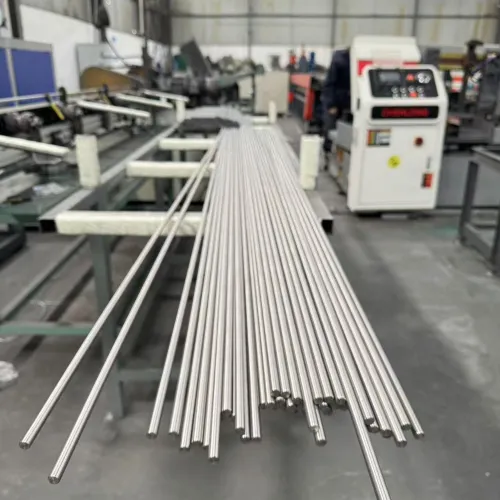
The aerospace, medical, and marine industries have increasingly turned to advanced materials that can withstand extreme conditions while maintaining structural integrity. Among these materials, titanium stands out as a revolutionary solution that has transformed manufacturing standards across multiple sectors. Engineers and designers consistently choose titanium components for applications where traditional metals simply cannot deliver the required performance characteristics. The unique properties of titanium make it an ideal choice for critical applications where failure is not an option.
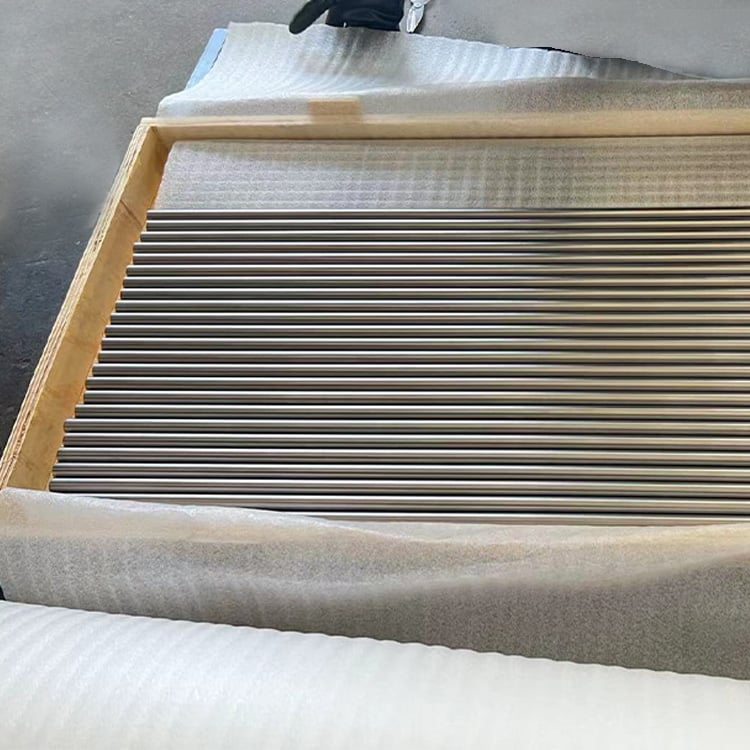
Exceptional Strength-to-Weight Characteristics
Superior Tensile Strength Properties
Titanium demonstrates remarkable tensile strength that often exceeds that of many steel alloys while maintaining significantly lower weight. This characteristic makes titanium bars particularly valuable in aerospace applications where every gram matters. The material can withstand stress loads of up to 63,000 PSI in its pure form, and when alloyed with other elements, this strength can increase dramatically. Engineers appreciate this combination because it allows for the design of lighter structures without compromising safety margins.
The crystalline structure of titanium contributes to its exceptional strength characteristics. Unlike traditional metals that may exhibit brittle failure modes under stress, titanium maintains its structural integrity across a wide range of loading conditions. This reliability has made it the material of choice for critical components in jet engines, spacecraft, and high-performance automotive applications. Manufacturing processes can further enhance these properties through controlled heat treatment and work hardening techniques.
Weight Reduction Benefits
The density of titanium is approximately 60% that of steel, yet it maintains comparable or superior strength properties. This weight advantage translates directly into improved fuel efficiency in transportation applications and enhanced payload capacity in aerospace systems. Manufacturing engineers often find that switching to titanium components can reduce overall system weight by 20-40% compared to traditional steel alternatives. The weight savings become even more significant when considering the secondary effects of reduced structural loading throughout an entire assembly.
Beyond the immediate weight benefits, titanium's strength-to-weight ratio enables entirely new design possibilities. Structures can be made thinner and more elegant while maintaining required safety factors. This design freedom has led to breakthrough innovations in industries ranging from medical implants to racing car chassis. The material's properties allow engineers to push the boundaries of what's possible in terms of performance and efficiency.
Unmatched Corrosion Resistance
Chemical Stability in Harsh Environments
One of the most compelling advantages of titanium is its exceptional resistance to corrosion in virtually all environments. The material naturally forms a protective oxide layer that prevents further oxidation and chemical attack. This passive layer regenerates automatically if damaged, providing self-healing properties that traditional metals cannot match. Marine applications particularly benefit from this characteristic, as saltwater environments that rapidly degrade steel and aluminum have minimal impact on titanium components.
Chemical processing industries have embraced titanium for equipment that must handle corrosive substances. Unlike stainless steel, which can suffer from pitting and crevice corrosion in chloride environments, a titanium bar maintains its integrity even in highly aggressive chemical solutions. This resistance extends to high-temperature oxidation, making titanium ideal for applications involving elevated temperatures and reactive atmospheres. The long-term cost savings from reduced maintenance and replacement needs often justify the higher initial material costs.
Longevity and Maintenance Advantages
The corrosion resistance of titanium directly translates into extended service life and reduced maintenance requirements. Structures and components made from titanium can operate for decades without significant degradation, even in challenging environments. This longevity is particularly valuable in applications where access for maintenance is difficult or expensive, such as offshore platforms or space-based systems. The material's stability means that performance characteristics remain consistent throughout its service life.
Maintenance schedules for titanium components are typically much more relaxed compared to traditional materials. The absence of rust and corrosion means that protective coatings and regular refinishing become unnecessary. This maintenance reduction results in lower lifecycle costs and improved system availability. Industries that operate in remote locations or under strict regulatory oversight particularly value these characteristics, as they reduce operational complexity and compliance requirements.
Thermal Performance and Stability
High-Temperature Operating Capability
Titanium maintains its mechanical properties at elevated temperatures far better than most traditional metals. While aluminum begins to lose strength significantly above 200°F, titanium retains useful properties well beyond 800°F in many alloy compositions. This temperature stability makes titanium bars essential for applications involving heat cycling or sustained high-temperature operation. Gas turbine components, exhaust systems, and heat exchangers all benefit from titanium's thermal capabilities.
The material's low thermal expansion coefficient helps prevent thermal stress buildup in applications involving temperature fluctuations. This characteristic is crucial in precision applications where dimensional stability is critical. Electronic equipment housings, optical instrument frames, and measurement devices often incorporate titanium components to maintain accuracy across varying thermal conditions. The predictable thermal behavior allows engineers to design with confidence in temperature-sensitive applications.
Thermal Conductivity Characteristics
While titanium has lower thermal conductivity compared to copper or aluminum, this characteristic can be advantageous in many applications. The reduced heat transfer helps maintain temperature gradients in thermal management systems and provides natural insulation properties. Heat shields and thermal barriers often utilize titanium's low conductivity to protect sensitive components from heat damage. This property, combined with the material's high-temperature strength, makes it ideal for applications requiring thermal isolation.
The thermal properties of titanium can be tailored through alloying and processing techniques to meet specific application requirements. Some titanium alloys are formulated for enhanced thermal conductivity when heat dissipation is desired, while others are optimized for thermal resistance. This versatility allows designers to select the most appropriate titanium composition for their specific thermal management needs. The material's stability ensures that these thermal properties remain consistent throughout the component's service life.
Biocompatibility and Medical Applications
Safe Integration with Biological Systems
Titanium exhibits exceptional biocompatibility, making it the material of choice for medical implants and devices that must integrate safely with human tissue. The material does not trigger adverse immune responses or toxic reactions when implanted in the body. This compatibility stems from titanium's chemical inertness and the formation of a stable oxide layer that prevents ion release. Orthopedic implants, dental fixtures, and cardiovascular devices routinely incorporate titanium components for long-term implantation.
The osseointegration properties of titanium allow bone tissue to grow directly onto its surface, creating strong mechanical bonds without the need for cement or other bonding agents. This natural integration process results in more stable and longer-lasting implants compared to alternatives. Surgical instruments and medical devices also benefit from titanium's non-magnetic properties, which eliminate interference with diagnostic imaging equipment. The material's sterilization compatibility ensures that medical devices can be safely reprocessed without degradation.
Long-Term Implant Performance
Medical implants made from titanium have demonstrated exceptional long-term performance in clinical studies spanning decades. The material's corrosion resistance prevents the release of metal ions that could cause inflammatory responses or implant failure. Hip and knee replacements utilizing titanium components show significantly lower failure rates compared to traditional materials. The mechanical properties of titanium closely match those of human bone, reducing stress shielding effects that can lead to bone resorption.
Titanium's fatigue resistance is particularly important for implants subjected to cyclic loading, such as joint replacements that must withstand millions of load cycles over their service life. The material's ability to maintain structural integrity under repeated stress makes it ideal for applications where implant failure could have serious consequences. Advanced surface treatments and alloy compositions continue to improve the performance characteristics of titanium medical devices, expanding their applications into new areas of medicine.
Manufacturing and Processing Advantages
Machining and Fabrication Capabilities
Modern manufacturing techniques have evolved to effectively process titanium bar stock into complex components with high precision. While titanium requires specialized tooling and techniques compared to traditional metals, the resulting parts exhibit superior quality and performance characteristics. Computer numerical control machining centers equipped with appropriate cutting tools can achieve tight tolerances and excellent surface finishes on titanium components. The material's work hardening characteristics actually improve fatigue life in many applications.
Additive manufacturing technologies have opened new possibilities for titanium component production. 3D printing techniques can create complex internal geometries and lightweight structures that would be impossible to manufacture using traditional methods. These capabilities are particularly valuable in aerospace and medical applications where custom or low-volume parts are required. The ability to consolidate multiple components into a single printed part reduces assembly complexity and potential failure points.
Welding and Joining Techniques
Titanium can be successfully welded using specialized techniques that maintain the material's beneficial properties in the joint area. Inert gas shielding prevents contamination during welding, ensuring that weld zones retain their corrosion resistance and mechanical properties. Advanced welding processes such as electron beam and laser welding can create high-quality joints with minimal heat-affected zones. These capabilities allow for the construction of large, complex structures from smaller titanium components.
Mechanical fastening systems specifically designed for titanium provide reliable joining methods when welding is not practical. Titanium fasteners eliminate galvanic corrosion concerns that can arise when dissimilar metals are in contact. The compatibility between titanium components and fasteners ensures long-term joint integrity in demanding applications. Adhesive bonding techniques have also been developed for titanium, providing additional options for component assembly in weight-sensitive applications.
Economic Considerations and Value Proposition
Lifecycle Cost Analysis
While the initial material cost of titanium is higher than traditional metals, comprehensive lifecycle cost analysis often reveals significant economic advantages. The extended service life and reduced maintenance requirements of titanium components can result in lower total cost of ownership over the component's useful life. Industries operating in harsh environments or remote locations particularly benefit from the reduced maintenance and replacement needs. The improved reliability and reduced downtime associated with titanium components provide additional economic value.
Energy savings from weight reduction can provide substantial economic returns in transportation applications. Aircraft operators report significant fuel savings from titanium component usage, with payback periods often measured in months rather than years. Similar benefits apply to automotive applications where reduced vehicle weight improves fuel economy and performance. The economic benefits extend beyond direct cost savings to include improved system capabilities and competitive advantages in the marketplace.
Market Trends and Future Outlook
The titanium market continues to expand as new applications and processing techniques are developed. Increased production capacity and improved extraction methods are gradually reducing material costs, making titanium more accessible for a broader range of applications. Recycling programs for titanium scrap are becoming more sophisticated, further improving the material's economic profile. The growing emphasis on sustainability and lifecycle environmental impact favors materials like titanium that offer extended service life.
Emerging technologies in sectors such as renewable energy, electric vehicles, and advanced manufacturing are creating new opportunities for titanium applications. The material's unique combination of properties positions it well for these growing markets. Research into new titanium alloys and processing techniques continues to expand the material's capabilities and potential applications. Investment in titanium production capacity reflects industry confidence in the material's future growth prospects.
FAQ
What industries commonly use titanium bars for manufacturing
Titanium bars find extensive use across aerospace, medical, marine, chemical processing, and automotive industries. The aerospace sector utilizes titanium for aircraft components, engine parts, and spacecraft structures due to its strength-to-weight ratio and high-temperature capabilities. Medical applications include orthopedic implants, surgical instruments, and dental fixtures where biocompatibility is essential. Marine and chemical industries value titanium's corrosion resistance for equipment exposed to harsh environments, while the automotive sector uses it for high-performance components where weight reduction is critical.
How does the cost of titanium compare to traditional metals over time
While titanium has higher initial material costs compared to steel or aluminum, its superior durability and corrosion resistance often result in lower lifecycle costs. The extended service life means fewer replacements and reduced maintenance expenses over time. In applications where weight reduction provides operational savings, such as aerospace or transportation, the fuel efficiency gains can offset the higher material costs relatively quickly. The total cost of ownership analysis typically favors titanium in demanding applications despite the higher upfront investment.
Can titanium bars be recycled effectively
Titanium is highly recyclable and retains its beneficial properties through multiple recycling cycles. The recycling process involves remelting scrap titanium and reforming it into new products without significant property degradation. This recyclability contributes to the material's sustainability profile and helps reduce overall material costs. The aerospace and medical industries have established recycling programs for titanium components, creating a circular economy that maximizes material utilization and minimizes waste.
What special considerations are needed when working with titanium
Working with titanium requires specialized knowledge and equipment to achieve optimal results. Machining operations need appropriate cutting tools, speeds, and coolants to prevent work hardening and achieve good surface finishes. Welding must be performed in inert atmospheres to prevent contamination that could compromise the material's properties. Storage and handling procedures should prevent contamination from other metals or chemicals that could affect performance. Proper training for personnel working with titanium ensures that the material's beneficial properties are maintained throughout processing and assembly operations.