 EN
EN


Engineers across industries consistently turn to pure titanium sheet when designing critical components that demand exceptional performance under extreme conditions. This strategic material choice stems from titanium's unique combination of properties that solve engineering challenges where traditional metals fall short. The growing reliance on pure titanium sheet reflects its proven ability to deliver superior corrosion resistance, biocompatibility, and strength-to-weight ratios that enable breakthrough innovations in aerospace, medical, chemical processing, and marine applications.
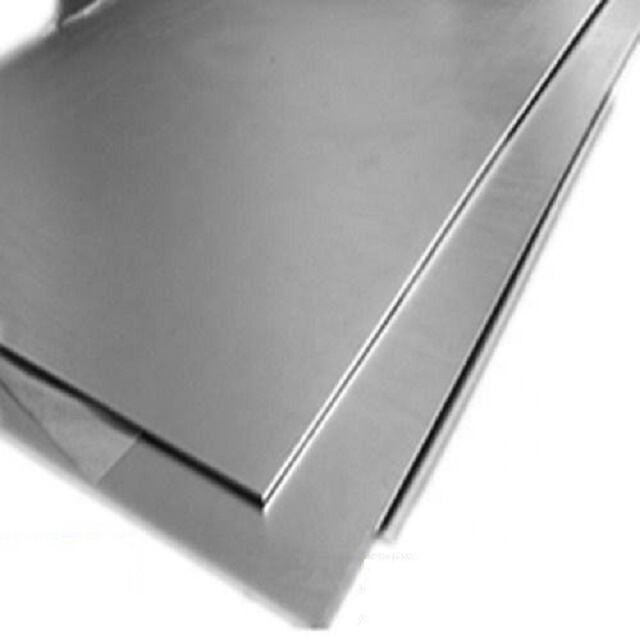
The engineering preference for pure titanium sheet originates from fundamental material science principles that address specific performance requirements impossible to achieve with conventional metals. Pure titanium's crystalline structure provides inherent advantages that engineers leverage to overcome design limitations imposed by steel, aluminum, and other traditional materials. Understanding why engineers select pure titanium sheet requires examining the critical performance factors that drive material selection decisions in demanding applications where failure is not an option.
Superior Mechanical Properties Drive Engineering Preference
Exceptional Strength-to-Weight Ratio
Engineers select pure titanium sheet because it delivers mechanical strength comparable to steel while weighing approximately 45% less. This strength-to-weight advantage enables design optimization impossible with heavier metals, allowing engineers to reduce structural mass without compromising load-bearing capacity. Pure titanium sheet maintains tensile strengths ranging from 240 to 550 MPa depending on grade and processing conditions, providing reliable performance in weight-critical applications.
The density advantage of pure titanium sheet becomes particularly valuable in aerospace and automotive engineering where every gram impacts fuel efficiency and performance. Engineers can achieve structural integrity targets while reducing overall system weight, leading to improved payload capacity, extended range, and enhanced operational efficiency. This weight reduction capability makes pure titanium sheet indispensable for components requiring both strength and lightness.
Outstanding Fatigue Resistance
Pure titanium sheet exhibits superior fatigue resistance compared to many engineering alloys, maintaining structural integrity under repeated stress cycles. Engineers value this property for components subjected to dynamic loading, vibration, and cyclic stress patterns common in machinery, aircraft structures, and marine equipment. The fatigue limit of pure titanium sheet approaches 50-60% of its ultimate tensile strength, significantly higher than aluminum alloys.
This fatigue resistance translates to longer service life and reduced maintenance requirements, factors that engineers must consider when evaluating total cost of ownership. Pure titanium sheet components can withstand millions of stress cycles without developing crack propagation, making them ideal for high-cycle applications where reliability is paramount. The predictable fatigue behavior allows engineers to design with confidence and establish accurate maintenance schedules.
Unmatched Corrosion Resistance for Harsh Environments
Chemical Inertness in Aggressive Media
Engineers choose pure titanium sheet specifically for its exceptional resistance to chemical attack in environments that rapidly degrade other metals. The naturally forming titanium dioxide surface layer provides protection against acids, alkalis, salt water, and organic chemicals that cause severe corrosion in steel and aluminum components. This pure titanium sheet maintains structural integrity in chemical processing equipment, offshore platforms, and desalination systems where conventional metals fail within months.
The passive oxide layer on pure titanium sheet regenerates automatically when damaged, providing self-healing corrosion protection that requires no external maintenance or coating systems. Engineers appreciate this inherent protection because it eliminates the need for expensive protective coatings, periodic recoating, and associated downtime. Pure titanium sheet performs reliably in pH ranges from highly acidic to strongly alkaline conditions without material degradation.
Marine Environment Superiority
Marine engineering applications particularly benefit from pure titanium sheet's immunity to seawater corrosion and biofouling. Engineers working on offshore structures, ship components, and underwater equipment choose pure titanium sheet because it resists chloride-induced stress corrosion cracking that destroys stainless steel in marine environments. The material maintains its mechanical properties indefinitely in seawater exposure without pitting or crevice corrosion.
Pure titanium sheet also resists marine organism attachment and growth, reducing maintenance requirements for submerged components. Engineers can design marine systems with extended service intervals because pure titanium sheet surfaces remain clean and functional without antifouling treatments. This biological inertness, combined with corrosion immunity, makes pure titanium sheet the preferred choice for critical marine infrastructure components.
Biocompatibility Advantages for Medical Engineering
Non-Toxic and Biocompatible Properties
Medical device engineers specifically select pure titanium sheet because of its proven biocompatibility and non-toxic nature in human tissue contact applications. The material exhibits no adverse reactions when implanted in the human body, making it ideal for surgical instruments, implants, and medical equipment housing. Pure titanium sheet meets all regulatory requirements for medical device materials, including ISO 10993 biocompatibility standards.
The osseointegration properties of pure titanium sheet enable direct bone attachment in orthopedic and dental implant applications. Engineers designing medical devices value this biological acceptance because it eliminates the risk of rejection reactions or inflammatory responses that can occur with other metals. Pure titanium sheet maintains its mechanical properties in biological environments without releasing harmful ions or degradation products.
Sterilization Compatibility
Engineers choose pure titanium sheet for medical applications because it withstands all standard sterilization methods without degradation. The material maintains dimensional stability and surface finish through repeated steam sterilization, gamma radiation, and chemical sterilization cycles. This sterilization resistance ensures that pure titanium sheet components retain their precision and functionality throughout their service life in medical environments.
Pure titanium sheet also resists the corrosive effects of cleaning agents and disinfectants commonly used in healthcare facilities. Engineers can specify pure titanium sheet for medical equipment knowing that routine cleaning and sterilization procedures will not compromise component integrity or performance over time. This durability reduces replacement costs and ensures consistent medical device operation.
Thermal and Electrical Properties for Specialized Applications
Low Thermal Conductivity Benefits
Engineers leverage the low thermal conductivity of pure titanium sheet in applications requiring thermal isolation or controlled heat transfer. With thermal conductivity approximately one-fourth that of stainless steel, pure titanium sheet provides excellent thermal barrier properties for cryogenic applications, heat exchangers, and temperature-sensitive equipment. This thermal resistance prevents unwanted heat transfer while maintaining structural integrity.
The thermal expansion coefficient of pure titanium sheet closely matches that of many ceramics and composites, making it valuable for joining dissimilar materials in high-temperature applications. Engineers can design thermal cycling components using pure titanium sheet without experiencing differential expansion stresses that cause joint failure in other metal combinations. This thermal compatibility enables reliable operation across wide temperature ranges.
Electromagnetic Transparency
Pure titanium sheet exhibits non-magnetic properties that engineers value for applications near sensitive electronic equipment or magnetic field environments. The material does not interfere with magnetic resonance imaging systems, electronic navigation equipment, or precision measuring instruments. Engineers specify pure titanium sheet for components that must operate in magnetic fields without causing interference or experiencing magnetic attraction forces.
The electrical resistivity of pure titanium sheet provides controlled electrical properties for specialized engineering applications. Engineers can utilize this resistivity for current limiting applications or electrical isolation requirements while benefiting from the material's other superior properties. Pure titanium sheet enables designs that require specific electrical characteristics combined with corrosion resistance and biocompatibility.
Manufacturing and Fabrication Advantages
Excellent Formability and Weldability
Engineers appreciate that pure titanium sheet can be formed, bent, and shaped using conventional metalworking techniques when proper procedures are followed. The material exhibits good ductility at room temperature, allowing complex geometries to be created through stamping, drawing, and forming operations. Pure titanium sheet maintains its properties through forming operations without developing stress concentrations or metallurgical changes that weaken other metals.
Welding capabilities of pure titanium sheet enable engineers to create complex assemblies and joints with full strength retention. The material welds cleanly using tungsten inert gas and electron beam welding processes, producing joints that match or exceed base material properties. Engineers can design welded structures using pure titanium sheet with confidence in joint integrity and long-term performance under demanding service conditions.
Long-Term Cost Effectiveness
While pure titanium sheet requires higher initial investment compared to conventional metals, engineers recognize the total cost advantages over component lifecycle. The combination of corrosion resistance, fatigue life, and maintenance-free operation often results in lower total cost of ownership despite higher material costs. Engineers can justify pure titanium sheet selection through reduced maintenance, longer service intervals, and elimination of replacement cycles.
Pure titanium sheet components often outlast multiple replacements of conventional materials, making them economically attractive for long-term installations. Engineers working on infrastructure projects, offshore platforms, and industrial equipment appreciate the lifecycle value that pure titanium sheet provides through its exceptional durability and reliability. This long-term perspective makes pure titanium sheet the logical choice for critical applications.
FAQ
What makes pure titanium sheet different from titanium alloys for engineering applications?
Pure titanium sheet contains minimal alloying elements, typically over 99% titanium content, which provides maximum corrosion resistance and biocompatibility compared to titanium alloys. Engineers choose pure titanium sheet when these properties are more important than the higher strength available from alloyed grades. Pure titanium sheet offers superior chemical resistance and biological compatibility that makes it irreplaceable in medical devices, chemical processing equipment, and marine applications where purity is essential.
How does the cost of pure titanium sheet compare to other engineering materials over the component lifecycle?
While pure titanium sheet has higher initial material costs than steel or aluminum, engineers often find it more economical over the complete component lifecycle due to elimination of corrosion protection systems, reduced maintenance requirements, and extended service life. The total cost of ownership frequently favors pure titanium sheet in demanding applications where conventional materials require frequent replacement or extensive maintenance. Engineers must evaluate lifecycle costs rather than initial material prices when making material selection decisions.
What are the limitations engineers should consider when specifying pure titanium sheet?
Engineers must consider that pure titanium sheet has lower strength compared to titanium alloys and may require thicker sections to achieve equivalent load-bearing capacity. The material also requires specialized welding procedures and protective atmospheres to prevent contamination during fabrication. Pure titanium sheet can experience galling and seizing in threaded connections or sliding contact applications without proper surface treatments, requiring engineers to design appropriate interface solutions.
Can pure titanium sheet be used in high-temperature applications that engineers typically encounter?
Pure titanium sheet maintains its properties up to approximately 300°C in air and higher temperatures in inert atmospheres, making it suitable for many engineering applications involving elevated temperatures. Engineers can use pure titanium sheet in chemical processing, aerospace, and industrial applications where this temperature range is acceptable. For higher temperature requirements, engineers typically specify titanium alloys or alternative high-temperature materials, but pure titanium sheet remains the preferred choice when corrosion resistance at moderate temperatures is the primary concern.
Table of Contents
- Superior Mechanical Properties Drive Engineering Preference
- Unmatched Corrosion Resistance for Harsh Environments
- Biocompatibility Advantages for Medical Engineering
- Thermal and Electrical Properties for Specialized Applications
- Manufacturing and Fabrication Advantages
-
FAQ
- What makes pure titanium sheet different from titanium alloys for engineering applications?
- How does the cost of pure titanium sheet compare to other engineering materials over the component lifecycle?
- What are the limitations engineers should consider when specifying pure titanium sheet?
- Can pure titanium sheet be used in high-temperature applications that engineers typically encounter?