 EN
EN


When engineers and procurement specialists evaluate materials for demanding structural and industrial applications, the 10mm titanium plate consistently rises to the top of the shortlist. Its specific thickness strikes a balance between manageable weight and substantial mechanical performance, making it highly practical across a wide range of heavy-duty environments. Whether the application involves marine infrastructure, aerospace assemblies, chemical processing equipment, or high-load fabrication, the 10mm titanium plate delivers a combination of properties that few materials can match.
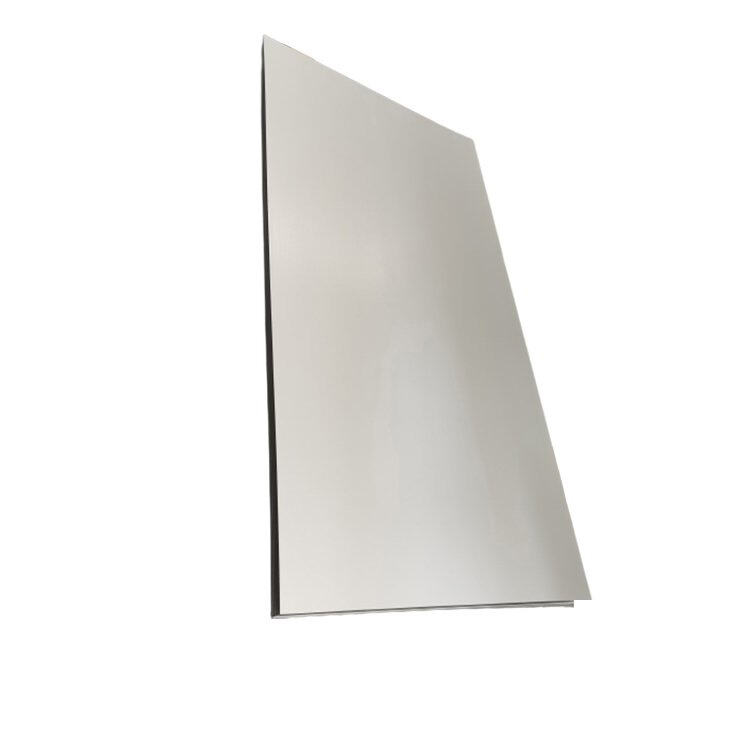
The preference for a 10mm titanium plate in heavy-duty projects is not simply a trend driven by novelty. It is rooted in decades of engineering data, field performance records, and material science advancements. Industries that operate under extreme mechanical stress, corrosive exposure, or high thermal variance have repeatedly confirmed that the 10mm titanium plate performs reliably where alternatives fall short. Understanding the specific reasons behind this preference helps engineers and buyers make more confident material decisions from the outset.
Mechanical Strength and Structural Integrity
Why Thickness Matters in Load-Bearing Applications
The 10mm titanium plate occupies an important dimensional range for structural use. At this thickness, a 10mm titanium plate provides enough cross-sectional rigidity to handle significant static and dynamic loads without excessive material volume. In applications such as pressure vessels, heavy brackets, or structural frames, a 10mm titanium plate resists deformation under sustained load far better than thinner alternatives. Engineers frequently specify a 10mm titanium plate precisely because this thickness offers predictable yield behavior, which simplifies design calculations and reduces safety margin uncertainty.
A 10mm titanium plate also performs well in cyclic loading conditions. Fatigue resistance is critical in environments where components experience repeated stress cycles, such as offshore platforms or aerospace structural panels. The 10mm titanium plate maintains its structural integrity through many load cycles without developing micro-cracks at the rate seen in comparable steel plates of equal thickness. This translates directly into longer service intervals and reduced maintenance costs for projects operating in high-demand conditions.
Strength-to-Weight Ratio Advantage
One of the most cited reasons engineers prefer a 10mm titanium plate is its exceptional strength-to-weight ratio. Titanium is roughly 45 percent lighter than steel while delivering comparable tensile strength. A 10mm titanium plate therefore offers structural performance similar to a much heavier steel plate, which is a decisive advantage in weight-sensitive projects. Aerospace assemblies, lightweight marine structures, and portable heavy-duty equipment all benefit significantly when a 10mm titanium plate replaces steel in primary load-bearing roles. Reducing overall structure weight without compromising strength directly improves fuel efficiency, payload capacity, and handling characteristics.
Corrosion Resistance in Harsh Environments
Performance in Chemical and Marine Conditions
Heavy-duty projects frequently involve exposure to corrosive media, and this is where a 10mm titanium plate demonstrates a clear advantage over conventional metals. Titanium forms a stable, self-repairing oxide layer on its surface that provides outstanding resistance to chlorides, acids, and seawater. A 10mm titanium plate used in chemical reactors, desalination plants, or offshore platforms maintains its surface integrity and dimensional stability even after prolonged exposure to aggressive environments. This corrosion resistance eliminates the need for protective coatings or liners, which reduces both initial installation cost and long-term maintenance effort.
The passive oxide layer on a 10mm titanium plate regenerates rapidly when scratched or damaged, ensuring continuous protection without intervention. This self-healing characteristic is particularly valuable in submerged or enclosed applications where manual maintenance is difficult. Many industries that previously relied on stainless steel or coated carbon steel have transitioned to a 10mm titanium plate because the long-term corrosion performance reduces total lifecycle cost substantially, even when the initial material price is higher.
Thermal Stability Under Extreme Conditions
A 10mm titanium plate also retains its mechanical properties across a broader temperature range than many competing materials. In applications involving elevated temperatures, such as heat exchangers or industrial furnace components, a 10mm titanium plate maintains strength and dimensional accuracy without significant creep or thermal distortion. The low thermal expansion coefficient of titanium means a 10mm titanium plate experiences less dimensional change during thermal cycling, which is critical in precision assemblies or tightly fitted structural connections. This thermal stability reinforces why a 10mm titanium plate is preferred in environments that combine mechanical load with temperature variation.
Practical Suitability for Industrial Fabrication
Machinability and Weldability at 10mm Thickness
From a fabrication perspective, a 10mm titanium plate sits in a practical range that supports efficient cutting, forming, and welding. Thinner titanium plates can be challenging to weld without distortion, while very thick plates demand more specialized equipment. A 10mm titanium plate is thick enough to absorb welding heat without warping during standard TIG welding procedures, and it is thin enough to be handled with conventional CNC cutting and forming tools. This makes a 10mm titanium plate a highly workable option for fabricators producing custom components, tanks, flanges, and structural sections used in heavy-duty assemblies.
Proper shielding gas coverage and controlled heat input are still required when welding a 10mm titanium plate, but these requirements are well understood and manageable for experienced fabrication shops. The 10mm titanium plate can also be formed through press braking and rolling within standard titanium fabrication tolerances, allowing manufacturers to produce complex geometries needed for industrial equipment. This balance of workability and performance makes a 10mm titanium plate a practical first choice rather than a specialized last resort.
Long-Term Return on Investment
While a 10mm titanium plate carries a higher upfront material cost compared to carbon steel or aluminum, its long-term return on investment is compelling for heavy-duty applications. The combination of corrosion resistance, fatigue strength, and thermal stability means a 10mm titanium plate lasts significantly longer in service without replacement or repair. Projects that specify a 10mm titanium plate typically report lower total lifecycle costs when accounting for reduced downtime, eliminated coating maintenance, and extended replacement intervals. For projects where operational continuity is critical, the 10mm titanium plate represents a financially sound and technically justified material choice.
FAQ
What grades of titanium are available in a 10mm titanium plate?
A 10mm titanium plate is commonly available in Grade 1, Grade 2, Grade 5 (Ti-6Al-4V), and Grade 7, among others. Grade 2 is the most widely used for general industrial and marine applications due to its combination of corrosion resistance and formability. Grade 5 offers significantly higher tensile strength and is preferred in aerospace or high-stress structural applications where a 10mm titanium plate must carry exceptional loads.
How does a 10mm titanium plate compare to stainless steel at the same thickness?
A 10mm titanium plate is roughly 43 percent lighter than a stainless steel plate of the same dimensions while offering comparable or superior corrosion resistance in many environments. In chloride-rich or acidic conditions, a 10mm titanium plate outperforms most grades of stainless steel without requiring surface treatments. For weight-sensitive heavy-duty applications, this difference is a major practical advantage when choosing between the two materials.
Is a 10mm titanium plate suitable for high-pressure vessel fabrication?
Yes, a 10mm titanium plate is frequently used in pressure vessel fabrication, particularly for applications involving corrosive process media or elevated temperatures. The material meets the mechanical property requirements outlined in major pressure vessel design standards, and its corrosion resistance reduces wall thickness requirements compared to less resistant alloys. Fabricators should ensure proper weld procedure qualification and inert gas shielding when using a 10mm titanium plate in certified pressure vessel construction.