 EN
EN


When engineers and procurement specialists evaluate materials for structural applications, the choice of plate thickness and material grade plays a decisive role in long-term performance. A 10mm titanium plate occupies a particularly valuable position in this decision, offering a balance of mechanical strength, reduced mass, and outstanding environmental resistance that few competing materials can match. Understanding exactly what qualifies this specific configuration for structural use requires a closer look at the material properties, application context, and engineering logic behind the choice.
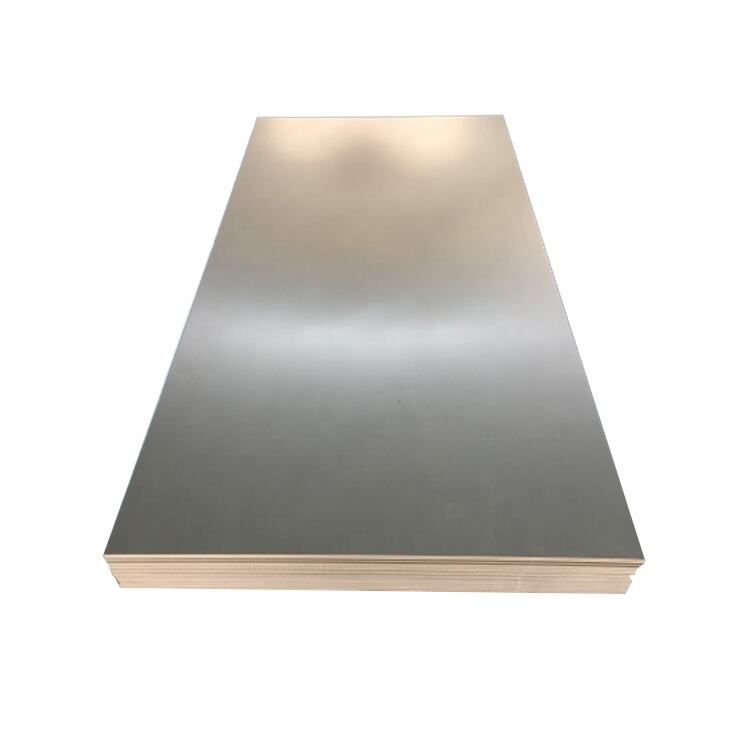
The 10mm titanium plate is widely specified across aerospace, marine, chemical processing, and civil infrastructure projects. Its thickness provides sufficient rigidity for load-bearing roles while keeping the overall assembly weight significantly lower than equivalent steel or aluminum solutions. As structural demands intensify in modern engineering, the 10mm titanium plate continues to prove its value through consistent field performance and measurable lifecycle advantages.
Mechanical Strength Behind the 10mm Titanium Plate
Tensile Strength and Yield Performance
The 10mm titanium plate delivers impressive tensile strength relative to its weight, making it an exceptional candidate for structural frames, support brackets, and load-transfer components. Grades such as Ti-6Al-4V bring tensile strength values exceeding 900 MPa, allowing the 10mm titanium plate to withstand intense mechanical stress without permanent deformation. This performance level rivals high-strength steel at roughly 45 percent of the weight, which directly translates into lower dead loads and reduced foundation requirements in large-scale structures.
Yield strength is equally significant when evaluating the 10mm titanium plate for structural use. A high yield-to-tensile ratio means the plate maintains its shape under cyclic or impact loading, which is critical in dynamic structural environments such as bridges, offshore platforms, and aircraft frames. Engineers can therefore rely on the 10mm titanium plate to absorb and redistribute stress without premature failure.
Fatigue Resistance and Long-Term Integrity
Structural components endure repeated loading cycles throughout their service life. The 10mm titanium plate exhibits excellent fatigue resistance, retaining structural integrity even after millions of load cycles. This characteristic makes the 10mm titanium plate especially suitable for rotating machinery mounts, aircraft structural skins, and marine hull reinforcements where cyclic stress is unavoidable. The material's internal crystalline stability reduces micro-crack propagation, extending the operational lifespan of any structure incorporating the 10mm titanium plate.
Corrosion Resistance and Environmental Suitability
Natural Oxide Layer Protection
One of the defining structural advantages of the 10mm titanium plate is its natural ability to form a stable titanium dioxide layer on its surface when exposed to oxygen. This passive oxide layer acts as a self-renewing barrier against moisture, chloride ions, acids, and industrial pollutants. Unlike stainless steel, which requires controlled alloying to resist corrosion, the 10mm titanium plate achieves this protection inherently, making it reliable in coastal, chemical, and subsea structural environments without additional surface treatments.
The 10mm titanium plate retains its corrosion resistance even when the surface is scratched or mechanically abraded, because the oxide layer reforms almost instantly upon exposure to air or water. This self-healing behavior is a critical quality for structural components that may experience abrasion during installation, operation, or maintenance cycles. Specifying a 10mm titanium plate in corrosive environments dramatically reduces the cost and frequency of protective coating reapplication.
Performance in Extreme Temperatures
Structural materials must maintain their properties across a wide service temperature range. The 10mm titanium plate performs reliably from cryogenic conditions down to approximately -196 degrees Celsius up to elevated service temperatures approaching 600 degrees Celsius for certain alloy grades. This thermal stability makes the 10mm titanium plate suitable for structural applications in chemical reactors, exhaust systems, and heat exchangers where thermal cycling would compromise conventional materials. The low thermal expansion coefficient of the 10mm titanium plate also minimizes dimensional change under temperature variation, preserving joint integrity and alignment in precision structures.
Weight Efficiency and Design Flexibility
Mass Reduction Without Structural Compromise
The density of titanium sits at approximately 4.5 grams per cubic centimeter, compared to steel at around 7.8 grams per cubic centimeter. This means that a 10mm titanium plate covering the same area as a steel plate of equivalent structural capacity will weigh substantially less. In aerospace and marine engineering, this mass reduction translates directly into improved fuel efficiency, increased payload capacity, and lower operational costs. The 10mm titanium plate allows designers to meet load-bearing specifications while achieving the weight budgets that performance-critical structures demand.
Beyond weight savings, the 10mm titanium plate supports greater design freedom. Its machinability and weldability, when using appropriate processes such as electron beam or TIG welding in inert atmospheres, allow fabricators to shape and join the 10mm titanium plate into complex structural geometries. This design flexibility enables innovative structural solutions that rigid, heavier materials cannot efficiently accommodate.
Compatibility with Modern Structural Systems
The 10mm titanium plate integrates well with modern structural systems, including bolted connections, adhesive bonding, and hybrid composite assemblies. Its galvanic neutrality with carbon fiber composites makes the 10mm titanium plate a preferred structural interface material in advanced aerospace and defense applications. When paired with titanium fasteners, the 10mm titanium plate eliminates bimetallic corrosion risks entirely, further extending the structural system's maintenance-free service interval.
FAQ
What grade of titanium is most commonly used for a 10mm titanium plate in structural roles?
Grade 5 titanium, known as Ti-6Al-4V, is the most commonly specified alloy for a 10mm titanium plate in structural applications due to its high tensile strength, fatigue resistance, and good weldability. Grade 2 commercially pure titanium is chosen when corrosion resistance is the priority over maximum strength, particularly in chemical processing structural components.
How does a 10mm titanium plate compare to stainless steel for structural weight?
A 10mm titanium plate is approximately 43 percent lighter than a stainless steel plate of the same dimensions and equivalent structural capacity. This significant mass advantage makes the 10mm titanium plate preferable in weight-sensitive structures such as aircraft, high-speed marine vessels, and portable structural equipment where every kilogram saved improves operational efficiency.
Is the 10mm titanium plate suitable for outdoor structural applications?
Yes, the 10mm titanium plate is well suited for outdoor structural applications. Its inherent corrosion resistance to atmospheric moisture, UV exposure, and airborne pollutants means it requires no protective coating in most outdoor environments. The 10mm titanium plate maintains its structural properties and surface appearance over decades of outdoor exposure, making it a cost-effective long-term material choice for bridges, facades, and open-air industrial structures.