 EN
EN



Modern energy applications demand materials that can withstand extreme operating conditions while delivering consistent performance across decades of service life. Titanium foil has emerged as a critical enabling material in next-generation energy systems, from hydrogen fuel cells to advanced battery architectures and solar energy conversion platforms. Its unique combination of corrosion resistance, electrical conductivity, and mechanical stability at minimal thickness makes titanium foil indispensable in applications where space constraints, weight reduction, and long-term reliability intersect. Understanding how titanium foil functions within these energy systems reveals why engineers increasingly specify this material for components that determine overall system efficiency and operational longevity.
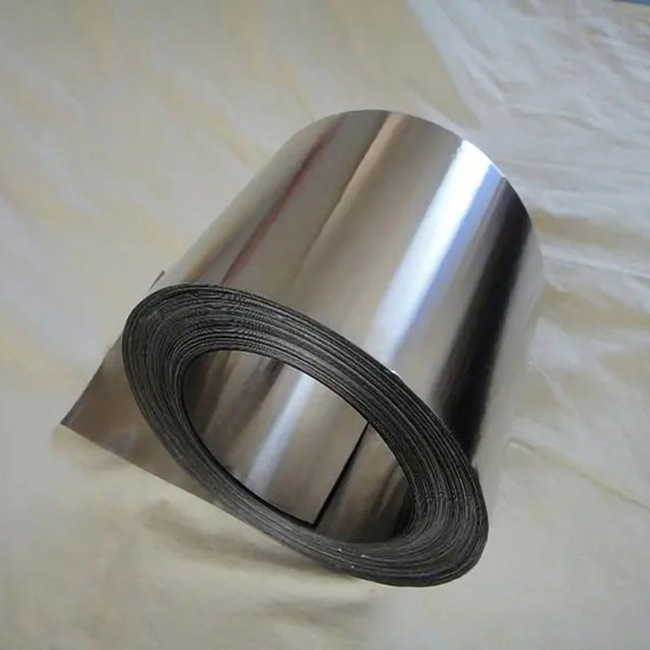
The transition toward renewable energy infrastructure and electrochemical storage systems has fundamentally changed material selection criteria across the energy sector. Traditional materials like stainless steel, nickel alloys, and copper foils face significant limitations when exposed to the aggressive chemical environments and thermal cycling characteristic of modern energy devices. Titanium foil addresses these challenges through its naturally forming passive oxide layer, which provides exceptional resistance to corrosive electrolytes, high-purity hydrogen, and oxidizing atmospheres without requiring protective coatings that can degrade over time. This article examines the specific mechanisms through which titanium foil enables performance improvements in fuel cell systems, battery technologies, solar applications, and emerging energy storage solutions, providing detailed insight into why this material has become central to energy innovation strategies worldwide.
Titanium Foil in Hydrogen Fuel Cell Systems
Bipolar Plate Construction and Current Distribution
In proton exchange membrane fuel cells, titanium foil serves as the primary material for bipolar plates that separate individual cells within a fuel cell stack while conducting electrical current between them. The foil must simultaneously distribute hydrogen and oxygen gases to reaction sites, remove product water, and conduct electrons with minimal resistive losses. Titanium foil with thickness ranging from 0.05 to 0.2 millimeters provides the necessary mechanical strength to withstand compression forces while maintaining the ultra-thin profile required for high volumetric power density. The material's inherent corrosion resistance becomes critical in this application, as bipolar plates face continuous exposure to acidic or alkaline electrolytes, high-purity hydrogen, and oxygen-rich environments at elevated temperatures.
Engineers specify titanium foil for this application because it maintains stable contact resistance over thousands of operating hours without the surface degradation that limits the service life of coated stainless steel alternatives. The passive titanium oxide layer that forms naturally on the foil surface is only a few nanometers thick but provides complete protection against corrosion while remaining electronically conductive when properly managed through surface treatments. Advanced fuel cell designs incorporate flow field patterns directly stamped or etched into titanium foil sheets, creating the precise gas distribution channels that ensure uniform reactant delivery across the entire active area of the membrane electrode assembly. This manufacturing approach eliminates the need for separate flow field components, reducing stack complexity and improving the power-to-weight ratio critical for transportation applications.
Membrane Electrode Assembly Support Structures
Beyond bipolar plates, titanium foil functions as a structural support element within membrane electrode assemblies themselves, particularly in high-temperature fuel cells operating above 100 degrees Celsius. The foil provides mechanical reinforcement to thin polymer or ceramic electrolyte membranes that would otherwise deform under compression or thermal stress during stack assembly and operation. Titanium foil's low thermal expansion coefficient closely matches that of many electrolyte materials, minimizing interfacial stresses that can lead to delamination or membrane cracking during thermal cycling between startup, operation, and shutdown phases.
The material's chemical inertness ensures that titanium foil support structures do not introduce ionic contaminants into the electrolyte, which would reduce ionic conductivity and accelerate membrane degradation. In solid oxide fuel cells operating at temperatures exceeding 600 degrees Celsius, specialized titanium foil alloys maintain structural integrity while resisting oxidation in the high-temperature oxygen-rich environment at the cathode side. This application demonstrates how titanium foil enables fuel cell designs that would be impossible with conventional materials, directly contributing to the efficiency improvements that make hydrogen energy systems economically viable for stationary power generation and heavy-duty transportation.
Gas Diffusion Layer Integration
Titanium foil serves as the foundation material for gas diffusion layers in fuel cells, where it must balance contradictory requirements for gas permeability and electrical conductivity. Engineers create precisely controlled porosity in titanium foil through sintering processes that bond titanium particles into a porous sheet, or through laser perforation techniques that create regular patterns of microscopic holes. These porous titanium foil structures allow hydrogen and oxygen gases to reach catalyst sites while simultaneously conducting electrons away from reaction zones and managing water transport to prevent flooding that blocks gas access to the catalyst layer.
The thickness uniformity of titanium foil becomes critical in this application, as variations of even 5 micrometers can create non-uniform current density distributions that reduce overall cell efficiency and create localized hotspots. Advanced titanium foil manufacturing processes achieve thickness tolerances within 2 micrometers across widths exceeding one meter, enabling large-format fuel cells for commercial vehicle applications. The material's resistance to hydrogen embrittlement ensures that gas diffusion layers maintain structural integrity even after years of exposure to high-pressure hydrogen, avoiding the mechanical failure modes that affect other conductive porous materials in this demanding environment.
Advanced Battery Technology Applications
Lithium-Ion Battery Current Collectors
In high-performance lithium-ion batteries, titanium foil replaces traditional copper and aluminum current collectors in applications where enhanced safety and extended cycle life justify the material cost premium. The foil serves as the conductive substrate onto which active electrode materials are coated, collecting electrons during charge and discharge cycles while providing mechanical support to the electrode structure. Titanium foil's electrochemical stability window is significantly wider than copper, allowing its use as a current collector for both anode and cathode materials without risk of electrochemical dissolution at extreme potentials encountered during overcharge conditions or rapid charging protocols.
Battery engineers specify titanium foil for current collectors in applications where safety cannot be compromised, such as aerospace systems and medical implantable devices. The material does not form dendritic structures during lithium plating, which eliminates a major failure mechanism that causes internal short circuits in conventional lithium-ion cells. Titanium foil with thickness ranging from 8 to 15 micrometers provides sufficient mechanical strength to survive the aggressive calendaring processes used in electrode manufacturing while minimizing inactive mass that reduces specific energy. Surface treatments applied to titanium foil current collectors improve adhesion between the metal substrate and electrode coating materials, ensuring that active materials remain electrically connected throughout thousands of charge-discharge cycles.
Solid-State Battery Architecture
Solid-state batteries represent the next generation of electrochemical energy storage, replacing liquid electrolytes with solid ceramic or polymer materials that eliminate flammability risks and enable higher energy densities. Titanium foil plays a critical role in solid-state battery architectures as the interface layer between solid electrolytes and metallic lithium anodes. The material's chemical compatibility with both lithium metal and ceramic electrolytes allows titanium foil to function as a stable interlayer that prevents unwanted reactions while maintaining low interfacial resistance for lithium-ion transport.
In this application, ultra-thin titanium foil with thickness below 10 micrometers acts as a current collector that conforms to the surface irregularities of sintered ceramic electrolytes, ensuring uniform current distribution across the electrode-electrolyte interface. The foil's ductility allows it to accommodate the volume changes that occur in lithium metal anodes during cycling without cracking or delaminating from the electrolyte surface. Research into solid-state battery manufacturing has demonstrated that titanium foil current collectors significantly reduce the interfacial resistance that limits charge and discharge rates in solid-state cells, directly addressing one of the major technical barriers to commercialization of this transformative battery technology.
Thermal Management in High-Power Battery Packs
Titanium foil serves specialized thermal management functions in high-power battery packs designed for electric vehicles and grid storage applications. Engineers integrate thin titanium foil sheets as thermal barriers between individual battery cells, leveraging the material's relatively low thermal conductivity compared to copper or aluminum to prevent thermal runaway propagation. When one cell experiences an exothermic failure event, titanium foil barriers limit heat transfer to adjacent cells, providing critical minutes for battery management systems to isolate the affected module and activate fire suppression systems.
The material's high melting point and resistance to combustion make titanium foil uniquely suited for this safety-critical application. Unlike polymer-based thermal barriers that degrade at elevated temperatures or contribute fuel to fire events, titanium foil maintains structural integrity throughout thermal runaway scenarios. Advanced battery pack designs incorporate perforated titanium foil sheets that balance thermal isolation with the need for pressure equalization and gas venting during normal operation. This application demonstrates how titanium foil enables battery system architectures that meet increasingly stringent safety standards while maintaining the energy density required for long-range electric vehicles and cost-effective grid storage installations.
Solar Energy Conversion and Storage Systems
Photovoltaic Cell Back Contact Layers
In high-efficiency solar photovoltaic systems, titanium foil functions as a back contact layer that collects photogenerated electrons while providing structural support to thin-film solar absorbers. The material's work function and surface properties can be engineered to create favorable band alignment with various photovoltaic absorber materials, minimizing contact resistance that reduces cell efficiency. Titanium foil's reflectivity in the infrared spectrum helps redirect unabsorbed photons back through the absorber layer, increasing the effective optical path length and improving light harvesting efficiency in thin-film solar cells.
Manufacturers of flexible solar panels specify titanium foil as the substrate material for roll-to-roll deposition of photovoltaic layers, taking advantage of the material's ability to withstand high-temperature processing without warping or oxidizing. The foil's surface can be textured at the microscale to enhance light trapping through diffuse reflection, further improving cell efficiency without increasing material costs or manufacturing complexity. Titanium foil back contacts demonstrate exceptional durability in outdoor environments, maintaining stable electrical properties after decades of exposure to temperature cycling, humidity, and ultraviolet radiation that degrade alternative contact materials.
Solar Thermal Absorber Components
Concentrated solar power systems utilize titanium foil in absorber assemblies that convert focused sunlight into thermal energy for power generation or industrial process heat. The foil serves as the substrate for selective absorber coatings that maximize solar absorption while minimizing thermal radiation losses at operating temperatures exceeding 400 degrees Celsius. Titanium foil's thermal stability and resistance to oxidation ensure that absorber assemblies maintain performance over the 25-year design life typical of solar thermal installations.
Engineers value titanium foil for this application because it can be formed into complex three-dimensional shapes that maximize surface area for heat collection while maintaining the thin profile required for rapid thermal response. The material's low thermal mass reduces the time required to reach operating temperature during morning startup, improving the daily energy collection efficiency of solar thermal systems. Titanium foil absorber assemblies resist corrosion from molten salt heat transfer fluids used in thermal storage systems, eliminating the contamination issues that limit the service life of stainless steel components in this aggressive chemical environment.
Photoelectrochemical Water Splitting Electrodes
Titanium foil enables emerging solar-to-hydrogen conversion technologies that directly split water into hydrogen and oxygen using sunlight. The material functions as both a structural substrate and an electrically conductive current collector for photoelectrochemical cells that integrate light absorption and electrocatalysis in a single device. Titanium foil's stability in aqueous electrolytes across a wide pH range makes it ideal for this application, where electrodes must withstand continuous exposure to water and dissolved oxygen under illumination.
Surface modifications applied to titanium foil create nanostructured electrodes with dramatically increased surface area for electrocatalyst deposition, improving the efficiency of hydrogen evolution reactions. The foil's native oxide layer can be engineered into specific crystal phases that exhibit photocatalytic activity, allowing the substrate itself to contribute to solar energy conversion rather than serving purely as an inert support structure. This application represents a frontier area where titanium foil's unique material properties enable entirely new approaches to renewable energy conversion that could significantly reduce the cost of green hydrogen production.
Emerging Energy Storage Technologies
Vanadium Redox Flow Battery Components
Grid-scale energy storage increasingly relies on redox flow batteries that store energy in liquid electrolytes pumped through electrochemical cells. Titanium foil serves as the primary electrode material in vanadium redox flow batteries, where it must withstand continuous exposure to highly acidic vanadium electrolytes at concentrations exceeding 2 molar sulfuric acid. The material's exceptional corrosion resistance in this extreme environment enables battery systems with operating lifetimes exceeding 20 years, making flow batteries economically viable for renewable energy integration and grid stabilization applications.
Engineers select titanium foil for flow battery electrodes because it maintains stable electrochemical activity over tens of thousands of charge-discharge cycles without the degradation that limits the lifespan of carbon-based electrode materials. The foil can be processed to create high-surface-area porous structures that maximize the electrochemically active area while maintaining low hydraulic resistance for electrolyte flow. Surface treatments applied to titanium foil enhance its electrocatalytic activity for vanadium redox reactions, reducing the voltage losses that determine round-trip efficiency in flow battery systems. This application demonstrates how titanium foil enables energy storage technologies specifically designed to address the multi-hour discharge durations required for renewable energy firming rather than the short-duration applications served by lithium-ion batteries.
Metal-Air Battery Architectures
Metal-air batteries promise energy densities approaching that of gasoline by reacting metal anodes with oxygen from ambient air rather than storing oxidizer within the battery. Titanium foil functions as the air cathode substrate in these systems, providing a corrosion-resistant platform for oxygen reduction catalysts while allowing air diffusion to reaction sites. The material's stability in alkaline electrolytes used in zinc-air and aluminum-air batteries ensures that cathode structures maintain performance throughout the battery's discharge cycle.
The breathable structure created by perforated or mesh titanium foil allows oxygen transport to the catalyst layer while preventing electrolyte leakage and carbonate formation that occurs when atmospheric carbon dioxide reacts with alkaline electrolytes. Titanium foil air cathodes demonstrate significantly longer operational lifetimes than carbon-based alternatives, which degrade through oxidation reactions that are thermodynamically favorable in the high-potential oxygen-rich environment at the cathode. This durability advantage makes titanium foil essential for electrically rechargeable metal-air battery designs that aim to combine the high energy density of primary metal-air cells with the reusability required for practical energy storage applications.
Supercapacitor Electrode Substrates
Supercapacitors bridge the performance gap between batteries and conventional capacitors, storing energy through electrostatic charge accumulation rather than chemical reactions. Titanium foil serves as the current collector substrate for supercapacitor electrodes, where its corrosion resistance and electrical conductivity support the high charge-discharge rates that define supercapacitor performance. The foil must maintain stable contact resistance with activated carbon or pseudocapacitive oxide materials throughout millions of charge-discharge cycles that occur over the device's 15-year operational lifetime.
Manufacturers process titanium foil into three-dimensional current collector architectures that maximize the interfacial area between the metal substrate and active materials, reducing internal resistance and improving power density. The material's compatibility with aqueous, organic, and ionic liquid electrolytes allows titanium foil current collectors to be used across the full range of supercapacitor chemistries, simplifying manufacturing processes and supply chains. Surface activation treatments create oxide structures on titanium foil that exhibit pseudocapacitive behavior, allowing the current collector to contribute directly to energy storage capacity rather than serving purely as an inert conductive substrate. This dual functionality represents an important pathway toward supercapacitors with energy densities approaching those of batteries while maintaining the rapid charging and long cycle life that distinguish supercapacitor technology.
FAQ
What thickness of titanium foil is most commonly used in fuel cell applications?
Fuel cell bipolar plates typically use titanium foil with thickness ranging from 0.05 to 0.2 millimeters, with the exact specification depending on stack design and mechanical requirements. Thinner foils enable higher power density by reducing the inactive volume within the fuel cell stack, but must maintain sufficient mechanical strength to withstand compression forces during stack assembly. Gas diffusion layer applications often use even thinner titanium foil, down to 0.02 millimeters, where porosity is introduced through sintering or perforation processes to enable gas transport while maintaining electrical conductivity.
How does titanium foil compare to stainless steel for battery current collectors?
Titanium foil offers superior electrochemical stability compared to stainless steel, maintaining integrity across a wider voltage window without dissolution or passivation that increases contact resistance. While stainless steel current collectors cost significantly less, they are limited to specific voltage ranges and can corrode in aggressive battery electrolytes, particularly at elevated temperatures. Titanium foil's resistance to lithium dendrite formation provides critical safety advantages in high-energy batteries where internal short circuits pose fire risks. The material choice depends on application requirements, with titanium foil specified where enhanced safety, extended cycle life, or operation at extreme voltages justify the higher material cost.
Can titanium foil withstand the operating temperatures in solid oxide fuel cells?
Standard commercially pure titanium foil is limited to continuous operating temperatures below 600 degrees Celsius due to accelerated oxidation at higher temperatures. However, specialized titanium alloy foils incorporating aluminum and tin have been developed specifically for solid oxide fuel cell applications operating at 600 to 800 degrees Celsius. These alloys form stable protective oxide scales that resist further oxidation while maintaining the electrical conductivity required for current collection. For solid oxide fuel cells operating above 800 degrees Celsius, titanium foil is generally not suitable, and alternative materials such as ceramic conductors or high-temperature alloys based on nickel or chromium are specified instead.
What surface treatments are applied to titanium foil for energy applications?
Surface treatments for titanium foil in energy applications include anodization to create controlled oxide layers with specific electrical properties, plasma treatment to enhance surface energy for improved coating adhesion, and chemical etching to increase surface roughness and electrochemically active area. For fuel cell applications, nitride or carbide coatings may be applied to reduce contact resistance while maintaining corrosion protection. Battery applications often employ carbon coating or conductive polymer treatments that improve compatibility with electrode active materials. Photoelectrochemical applications utilize specialized treatments that create nanostructured titanium dioxide surfaces with photocatalytic activity, allowing the foil substrate to participate directly in energy conversion reactions rather than serving purely as a structural support element.
Table of Contents
- Titanium Foil in Hydrogen Fuel Cell Systems
- Advanced Battery Technology Applications
- Solar Energy Conversion and Storage Systems
- Emerging Energy Storage Technologies
-
FAQ
- What thickness of titanium foil is most commonly used in fuel cell applications?
- How does titanium foil compare to stainless steel for battery current collectors?
- Can titanium foil withstand the operating temperatures in solid oxide fuel cells?
- What surface treatments are applied to titanium foil for energy applications?