 EN
EN


When engineers and procurement specialists evaluate materials for demanding marine and chemical environments, the 10mm titanium plate consistently rises to the top of the shortlist. Its exceptional balance of mechanical strength, corrosion immunity, and low density makes it a uniquely capable material where other metals quickly degrade or fail. Choosing the right plate thickness and alloy grade directly affects the long-term performance, safety, and cost-efficiency of any critical industrial system.
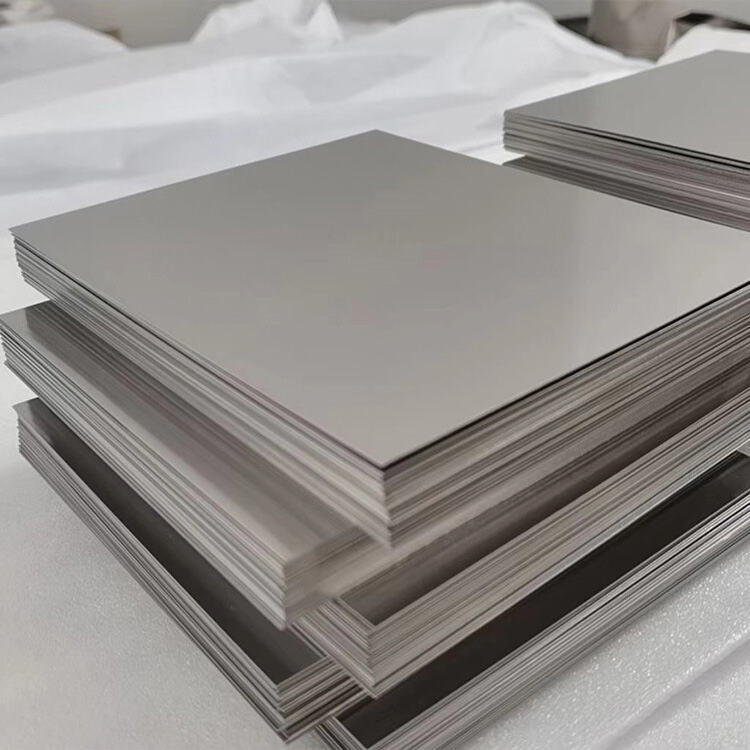
The 10mm titanium plate offers a structural thickness that is practical for a wide range of fabricated components, including heat exchanger shells, pipe flanges, reactor vessel walls, and offshore structural panels. At this thickness, the 10mm titanium plate provides sufficient rigidity for load-bearing applications while remaining light enough to reduce overall system weight. This article explores exactly why the 10mm titanium plate is the preferred choice in marine and chemical processing industries, and what technical properties justify that preference.
Corrosion Resistance in Aggressive Environments
Why Titanium Outperforms Steel and Alloys
The most compelling reason to choose a 10mm titanium plate for marine or chemical applications is its outstanding corrosion resistance. Titanium forms a stable, self-regenerating oxide layer on its surface the moment it contacts oxygen or moisture. This passive film protects the 10mm titanium plate against attack from seawater, chloride solutions, acids, and oxidizing chemicals that would rapidly corrode stainless steel or copper-based alloys. In offshore platforms, desalination units, and marine heat exchangers, a 10mm titanium plate maintains its integrity across decades of continuous exposure.
Chemical processing plants often handle aggressive media such as sulfuric acid, nitric acid, chlorine compounds, and organic solvents. The 10mm titanium plate resists pitting, crevice corrosion, and stress corrosion cracking in these environments at a level that most engineering metals simply cannot match. This translates directly into reduced maintenance frequency, fewer unplanned shutdowns, and lower total lifecycle costs for facilities that switch to 10mm titanium plate construction.
Performance in Seawater and Saline Conditions
Marine environments are particularly harsh due to the combined effects of salt, biological fouling, pressure variations, and dynamic mechanical loads. A 10mm titanium plate used in hull components, ballast systems, seawater cooling circuits, or offshore structural assemblies demonstrates virtually zero corrosion rate in full-immersion seawater conditions. Unlike carbon steel, the 10mm titanium plate does not require continuous protective coatings or cathodic protection in most marine service conditions, substantially reducing ongoing operational expenditure.
Mechanical Strength and Weight Advantages
High Strength-to-Weight Ratio
A primary engineering advantage of the 10mm titanium plate is its high strength-to-weight ratio. Titanium has a density approximately 45% lower than that of steel, yet Grade 2 titanium plate — the most commonly used commercial grade — delivers tensile strength values that meet or exceed many structural steel specifications. For marine vessels where weight reduction directly improves fuel economy and cargo capacity, choosing a 10mm titanium plate over an equivalent steel plate can deliver measurable performance gains. Chemical plant fabricators similarly benefit because lighter 10mm titanium plate components reduce structural support requirements and installation complexity.
Grade 5 titanium, also designated Ti-6Al-4V, offers even higher tensile strength and is available in 10mm titanium plate form for applications demanding greater mechanical performance. This alloy grade is frequently selected for pump housings, valve bodies, and pressure vessel components that must endure both high pressure and chemically aggressive service conditions simultaneously. The 10mm titanium plate in Grade 5 alloy maintains its mechanical properties at moderately elevated temperatures, further extending its range of suitability.
Fatigue Resistance and Long Service Life
Marine and chemical systems subject their structural components to cyclic loading, pressure pulsations, and thermal cycling. The 10mm titanium plate exhibits excellent fatigue resistance under these conditions, retaining structural reliability over long operational lifespans. Unlike aluminum alloys, which may develop fatigue cracks under cyclic marine stresses, the 10mm titanium plate maintains consistent performance characteristics across millions of loading cycles. This makes the 10mm titanium plate a sound long-term investment rather than a premium short-term solution.
Fabrication Compatibility and System Integration
Weldability and Forming of 10mm Plate
One practical consideration when specifying a 10mm titanium plate is how it integrates into fabrication workflows. Titanium can be welded using TIG and plasma welding processes, provided inert gas shielding is applied correctly to prevent oxidation of the weld zone. The 10mm titanium plate at this specific thickness allows clean, full-penetration welds without the distortion risk associated with thinner gauges, and without the excessive heat input challenges of thicker plate sections. Fabricators experienced with titanium report that 10mm titanium plate is one of the most workable thicknesses for both flat and formed components.
Cold forming and hot forming of the 10mm titanium plate are both achievable, enabling curved reactor shells, domed vessel heads, and custom marine panel geometries. The material's moderate springback characteristics require tooling adjustments compared to steel, but the results are dimensionally accurate and structurally sound. Many chemical equipment manufacturers now maintain dedicated fabrication lines for 10mm titanium plate because demand for titanium-based chemical reactors, heat exchangers, and storage vessels continues to grow.
Compatibility with Process Fluids and Temperature Ranges
Chemical system designers must confirm that the 10mm titanium plate is compatible with specific process fluids before specification. Titanium performs exceptionally well in oxidizing acid environments, chloride-rich solutions, and most organic chemical service conditions. However, reducing acid environments such as concentrated hydrofluoric acid or fuming sulfuric acid at elevated temperatures require careful compatibility verification. For the majority of chemical plant applications, the 10mm titanium plate is an ideal fit, operating reliably within temperature ranges from cryogenic service up to approximately 300 degrees Celsius without significant loss of mechanical properties.
FAQ
What grades of 10mm titanium plate are most commonly used in marine applications?
Grade 2 titanium is the most widely used grade for marine applications due to its excellent corrosion resistance, good formability, and competitive cost. For higher-strength requirements, Grade 5 (Ti-6Al-4V) 10mm titanium plate is selected for structurally demanding marine components such as propeller shafts, pump housings, and subsea structural parts.
How does 10mm titanium plate compare to stainless steel in chemical processing?
The 10mm titanium plate offers superior resistance to chloride-induced pitting and crevice corrosion compared to 316L stainless steel, which is particularly important in chlorine-based chemical processes and seawater-cooled systems. While the initial material cost of 10mm titanium plate is higher, lower maintenance costs and extended service life typically result in better total cost of ownership over a 10- to 20-year operational horizon.
Is 10mm titanium plate suitable for pressure vessel fabrication?
Yes, the 10mm titanium plate is widely used in pressure vessel fabrication for chemical and pharmaceutical industries. It meets the requirements of major pressure vessel design codes when used with appropriate weld procedures and material certifications. Its combination of high strength, corrosion resistance, and low density makes 10mm titanium plate a practical and reliable choice for both shell and head sections of process vessels operating in aggressive chemical environments.