 EN
EN


Titanium ball manufacturing represents one of the most demanding precision processes in modern industrial production. The creation of titanium balls requires advanced technology, strict quality control, and deep material expertise to achieve the tolerances demanded by aerospace, medical, chemical, and mechanical engineering applications. Understanding how titanium ball manufacturing works provides insight into why these components command premium pricing and why manufacturers must invest heavily in specialized equipment and skilled personnel.
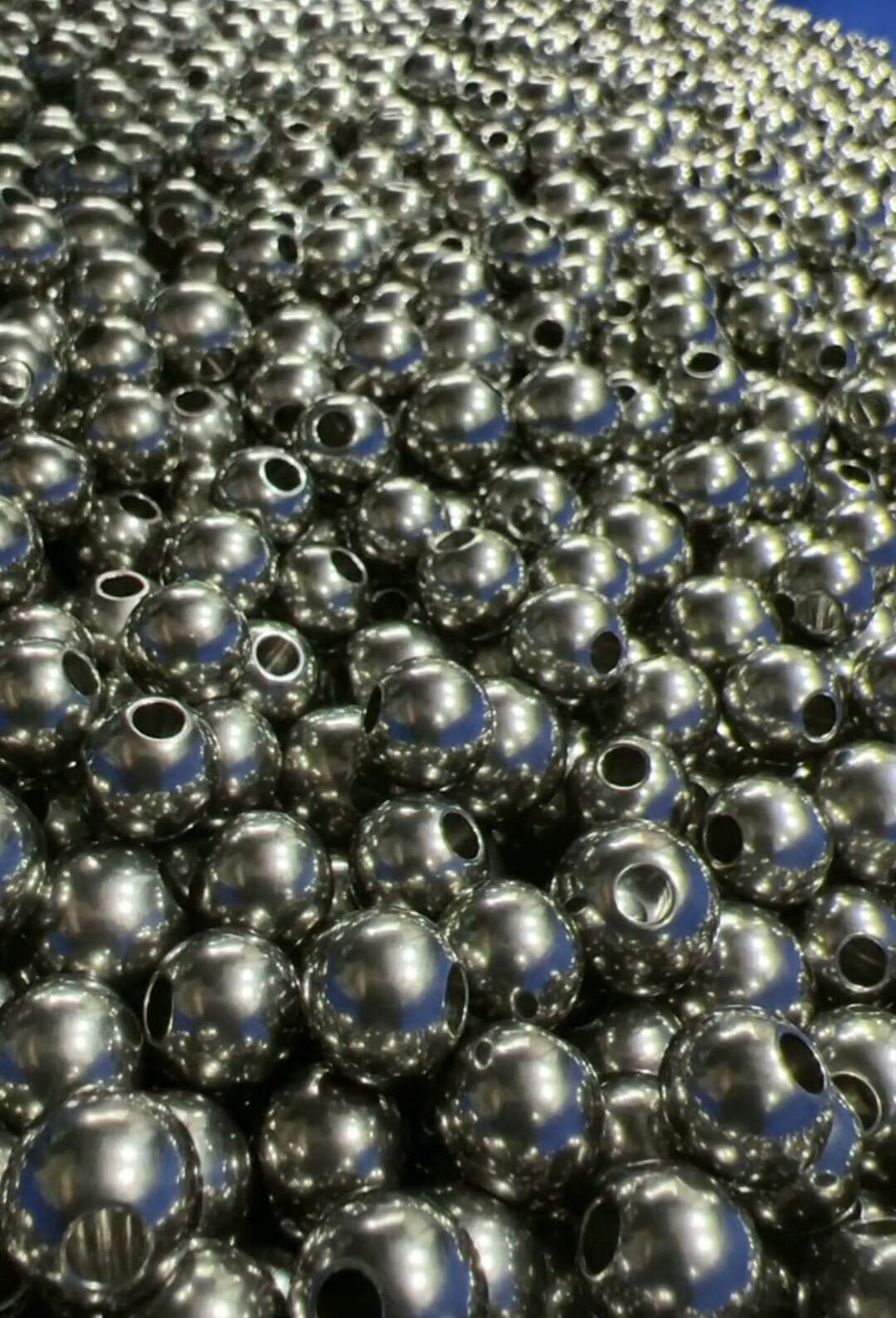
The process of titanium ball manufacturing begins with raw material selection and involves multiple stages of forming, grinding, polishing, and rigorous inspection. Each step in titanium ball manufacturing is carefully controlled to ensure dimensional accuracy, surface finish quality, and material consistency. Modern titanium ball manufacturing facilities operate with computer-controlled machinery and sophisticated measuring instruments to produce balls that meet specifications within microns of tolerance.
Raw Material Selection and Initial Processing
Sourcing Titanium for Ball Production
The foundation of superior titanium ball manufacturing depends entirely on raw material quality. Manufacturers source titanium from certified suppliers who provide materials with verified chemical composition, density uniformity, and microstructural consistency. Titanium ball manufacturing begins with ingot material or pre-formed spherical blanks, depending on the production scale and required specifications. The selected material must meet aerospace or medical-grade standards, which means rigorous chemical analysis and mechanical property verification occur before any forming operation begins in titanium ball manufacturing.
Initial Forming and Consolidation
Once raw titanium stock is verified, titanium ball manufacturing requires initial forming operations that transform the material into rough spherical shapes. Cold heading, hot forming, and isothermal forging represent the primary methods used in modern titanium ball manufacturing. Each forming process in titanium ball manufacturing is designed to align the grain structure favorably and eliminate internal voids or porosity. The selection between forming methods depends on ball diameter, wall thickness requirements, and the specific alloy being processed in titanium ball manufacturing applications.
Precision Grinding and Finishing Processes
Multi-Stage Grinding Operations
After initial forming, titanium ball manufacturing moves into the critical grinding phase where precision-ground abrasive wheels remove excess material and establish dimensional targets. Titanium ball manufacturing typically employs multiple grinding stages, beginning with coarse removal of scale and forming marks, progressing through medium finishing, and concluding with fine polishing operations. The grinding stage in titanium ball manufacturing generates significant heat, requiring coolant systems and feed rate precision to prevent material softening or microstructural damage. Each pass during titanium ball manufacturing is measured with coordinate measuring machines to verify progress toward final specifications.
Surface Finishing and Polishing
The final surface quality of titanium ball manufacturing depends on specialized polishing operations that remove grinding marks and achieve the required surface finish specification. Polishing in titanium ball manufacturing employs fine abrasive media, often combined with chemical polishing solutions that enhance surface uniformity without introducing defects. The surface finish achieved during titanium ball manufacturing directly impacts fatigue resistance, corrosion performance, and rolling characteristics in bearing or mechanical applications. Quality standards for titanium ball manufacturing specify surface roughness in the Ra 0.2 to 0.4 micron range, requiring expert technique and careful environmental control.
Quality Control and Inspection Standards
Dimensional Verification and Measurement
Quality assurance in titanium ball manufacturing employs laser measuring systems, coordinate measuring machines, and automated optical inspection to verify dimensional accuracy within required tolerances. Modern titanium ball manufacturing facilities inspect every ball for diameter variation, sphericity, and roundness using non-contact measurement technology. The inspection protocols in titanium ball manufacturing typically follow aerospace or medical industry standards such as AS9100, ISO 9001, or FDA requirements, depending on the intended application. Statistical process control throughout titanium ball manufacturing production runs enables manufacturers to identify trends and adjust processes before parts exceed tolerance limits.
Material Property Testing and Certification
Beyond dimensional verification, titanium ball manufacturing requires comprehensive testing of mechanical properties including tensile strength, hardness, and elongation on representative samples from each production batch. Titanium ball manufacturing facilities often conduct impact testing, fatigue testing, and corrosion resistance evaluation, particularly for aerospace or critical medical applications. Chemical composition analysis using spectrometry confirms that finished titanium ball manufacturing products maintain required alloy chemistry throughout the production run. Certification documentation for each titanium ball manufacturing lot provides traceability and proof of compliance with customer specifications and industry standards.
Advanced Manufacturing Techniques and Innovation
Automation and CNC Integration
Contemporary titanium ball manufacturing increasingly incorporates CNC-controlled grinding centers, automated inspection systems, and robotic material handling to improve consistency and reduce labor variability. Advanced titanium ball manufacturing equipment enables programmable tool paths, real-time diameter feedback, and automatic compensation for tool wear during production. The integration of Industry 4.0 concepts into titanium ball manufacturing allows remote monitoring, predictive maintenance, and data collection that optimizes production efficiency and quality metrics. Titanium ball manufacturing facilities that invest in advanced automation report improved consistency, reduced cycle times, and lower scrap rates compared to manual or legacy equipment setups.
Process Optimization and Cost Efficiency
Experienced titanium ball manufacturing operations continuously refine grinding speeds, coolant formulations, and finishing sequences to balance quality outcomes with production cost efficiency. Titanium ball manufacturing yields—the percentage of material converted to finished parts—have improved significantly through optimized forming strategies and reduced grinding allowances. Heat treatment cycles in certain titanium ball manufacturing applications enhance material properties without requiring additional grinding operations. Investment in specialized tooling and technique development within titanium ball manufacturing operations ultimately delivers better margins while maintaining strict quality compliance.
FAQ
What alloys are most commonly used in titanium ball manufacturing?
The most widely used alloys in titanium ball manufacturing include Ti-6Al-4V (titanium-aluminum-vanadium), CP titanium (commercially pure), and Ti-5Al-5V-5Fe-3Cr for high-strength applications. Each alloy offers distinct advantages in titanium ball manufacturing: Ti-6Al-4V provides excellent strength-to-weight ratio and corrosion resistance, while CP titanium offers superior biocompatibility for medical applications. Selection of the optimal alloy for titanium ball manufacturing depends on operating temperature, corrosion environment, mechanical load requirements, and cost considerations specific to each application.
How do titanium ball manufacturing tolerances compare to steel ball production?
Titanium ball manufacturing typically achieves tighter tolerances than standard steel ball production, often reaching ±0.0001 inches or better for demanding applications. The superior material properties and precise grinding capabilities in titanium ball manufacturing enable tolerances suitable for aerospace bearings, medical implant components, and extreme-environment applications. Steel ball manufacturing often operates with slightly looser tolerances due to different material characteristics, but titanium ball manufacturing's cost premium is justified when precision, weight reduction, and corrosion resistance are critical performance factors.
What testing standards apply to finished titanium ball manufacturing products?
Finished titanium ball manufacturing products are typically tested against aerospace standards like AS9100 or AMS specifications, medical standards such as ISO 5832 or ASTM F136, or general quality standards including ISO 9001 and ISO 13485. Titanium ball manufacturing for aerospace applications often requires additional fatigue testing, nondestructive evaluation, and fracture mechanics analysis to ensure safety-critical performance. The specific testing requirements for titanium ball manufacturing depend on end-use application, regulatory environment, and customer quality agreements established before production begins.