 EN
EN


Titanium balls have revolutionized precision engineering and mechanical efficiency across multiple industrial sectors. These specialized spheres deliver exceptional performance characteristics that traditional steel or ceramic alternatives cannot match. Understanding how titanium balls improve mechanical efficiency and precision is essential for manufacturing professionals, equipment designers, and industrial procurement specialists who demand superior component reliability and longevity.
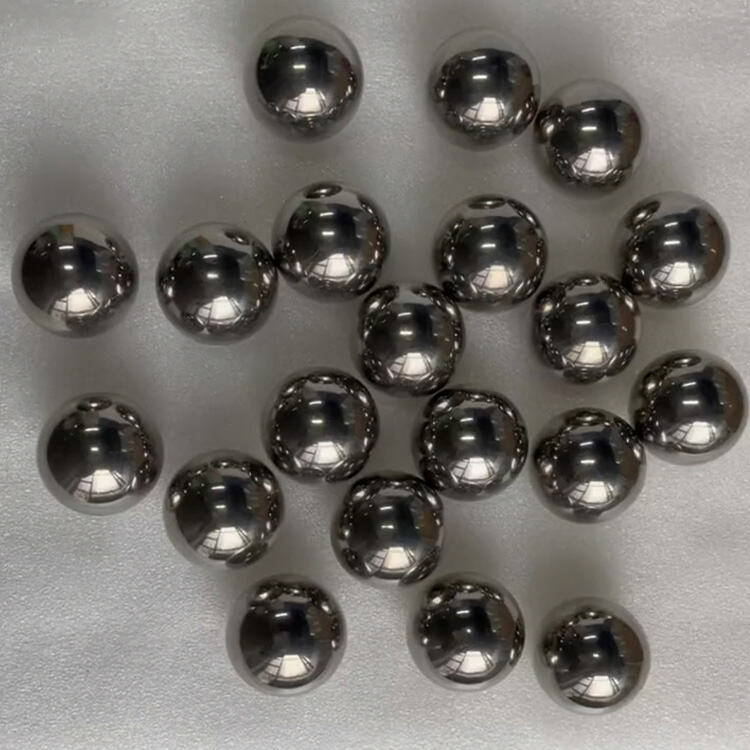
The engineering advantages of titanium balls stem from their unique material properties, which create measurable improvements in system performance and operational lifespan. When integrated into mechanical systems, titanium balls reduce friction, enhance load distribution, and maintain dimensional stability under extreme conditions. This article examines the technical mechanisms behind titanium balls' effectiveness and their practical applications in modern industrial environments.
Material Properties That Drive Mechanical Efficiency
Superior Strength-to-Weight Ratio
Titanium balls exhibit an exceptional strength-to-weight ratio that directly enhances mechanical efficiency in bearing and rolling applications. The lightweight nature of titanium reduces inertial forces, enabling faster acceleration and smoother rotational motion compared to heavier steel alternatives. This property becomes particularly valuable in high-speed machinery where reduced mass translates directly into lower energy consumption and improved thermal management, making titanium balls ideal for energy-sensitive industrial processes.
The mechanical efficiency gains from titanium balls' weight advantage extend beyond basic speed improvements. Lower rotational mass means reduced stress on support structures, extended bearing life, and lower vibration levels throughout the mechanical system. For machinery operators, this translates to quieter operation, reduced maintenance intervals, and improved safety margins in critical applications where vibration control is essential.
Exceptional Corrosion Resistance
Titanium balls naturally resist corrosion in marine, chemical, and high-humidity environments where steel components would degrade rapidly. This corrosion resistance eliminates the need for protective coatings that might compromise precision or add unwanted mass. When titanium balls operate in challenging environments, their material integrity remains stable, ensuring consistent mechanical efficiency and precision performance throughout extended service life without degradation.
The corrosion-resistant nature of titanium balls reduces unexpected failures and maintenance emergencies in industrial settings. Equipment designers can confidently specify titanium balls for applications where environmental exposure would typically compromise performance. This reliability creates cascading benefits: reduced downtime, lower maintenance costs, and more predictable operational performance across extended service periods.
Precision Engineering and Dimensional Stability
Thermal Stability Under Extreme Conditions
Titanium balls maintain dimensional accuracy across wide temperature ranges, a critical requirement for precision-dependent mechanical systems. Unlike steel or ceramic alternatives, titanium's thermal expansion coefficient remains stable, preventing the dimensional drift that compromises precision in temperature-fluctuating environments. This thermal stability ensures that titanium balls continue delivering precision performance whether systems operate in arctic conditions or high-heat industrial furnaces.
The precision retention provided by titanium balls becomes invaluable in applications where micro-level dimensional tolerances directly impact product quality. Aerospace bearings, medical device components, and precision manufacturing equipment all depend on titanium balls' ability to maintain exact specifications throughout thermal cycling. This dimensional consistency reduces waste, improves yield rates, and enables tighter tolerance specifications that would be impossible with thermally unstable materials.
Surface Hardness and Wear Resistance
Titanium balls achieve exceptional surface hardness through advanced manufacturing processes that create wear-resistant spheres capable of withstanding repeated mechanical stress without surface degradation. The hardened surface of titanium balls resists deformation from contact stresses, maintaining precision geometry through millions of operational cycles. This wear resistance directly translates to sustained mechanical efficiency because contact surfaces remain smooth and predictable, minimizing friction variation and energy loss over extended service life.
The wear-resistant properties of titanium balls enable precision systems to operate at higher speeds and loads without compromising accuracy. Engineering teams can confidently design systems with tighter tolerances when specifying titanium balls, knowing that surface degradation will not prematurely compromise mechanical precision. This capability opens possibilities for advanced machinery designs that would fail with conventional bearing materials.
Industrial Performance Advantages and Application Scenarios
High-Speed Bearing Applications
Titanium balls excel in high-speed bearing applications where centrifugal forces and thermal stresses challenge traditional materials. The lightweight properties of titanium balls reduce centrifugal loading, enabling higher operational speeds while maintaining dimensional precision and mechanical efficiency. Spindle bearings in machine tools, turbine systems, and precision rotating equipment consistently demonstrate extended service life and improved performance when utilizing titanium balls instead of conventional steel alternatives.
Equipment manufacturers report measurable efficiency improvements when transitioning to titanium balls in high-speed applications. Reduced energy consumption, lower operating temperatures, and quieter mechanical operation combine to deliver operational cost reductions that justify the material investment. These improvements accumulate across large installations, making titanium balls economically attractive for industrial operations where speed and precision are commercially critical.
Precision Valve and Flow Control Components
Titanium balls serve critical functions in precision valve systems where mechanical efficiency directly impacts fluid flow characteristics and system response time. The dimensional stability of titanium balls ensures consistent valve operation and reliable flow control across extended service periods. Aerospace, medical, and chemical processing industries depend on titanium balls to maintain precision performance in demanding fluid control applications where alternative materials would introduce unacceptable variability.
In flow control systems, titanium balls' precision geometry creates reproducible sealing surfaces and predictable contact characteristics that minimize turbulence and pressure drop. This precision translates to system efficiency improvements and more accurate process control. Industries specifying titanium balls in critical flow applications consistently achieve performance targets that would be difficult or impossible with conventional materials.
Medical and Surgical Equipment Integration
Medical device manufacturers increasingly incorporate titanium balls into surgical instruments and diagnostic equipment where biocompatibility, precision, and mechanical reliability are non-negotiable requirements. The combination of material properties that enhance mechanical efficiency and precision makes titanium balls ideal for orthopedic devices, surgical robots, and diagnostic instruments where equipment failure is unacceptable.
Precision mechanical systems in medical environments benefit tremendously from titanium balls' reliability and consistent performance characteristics. Regulatory compliance becomes simpler when material properties guarantee dimensional stability and surface integrity throughout product service life. Medical equipment designers can achieve tighter tolerances and longer operational life when specifying titanium balls, ultimately improving patient outcomes through enhanced equipment performance.
FAQ
How do titanium balls compare to steel balls in terms of mechanical efficiency?
Titanium balls deliver superior mechanical efficiency through their lighter weight, which reduces inertial forces and rotational stress, enabling higher speeds with lower energy consumption. Steel balls, while durable, cannot match titanium balls' strength-to-weight ratio or thermal stability across extreme temperature ranges. Industrial applications switching from steel to titanium balls typically report 15–25% improvements in energy efficiency and extended component lifespan, particularly in high-speed applications where weight reduction becomes a critical performance factor.
Can titanium balls maintain precision in fluctuating temperature environments?
Yes, titanium balls excel in temperature-fluctuating environments because their thermal expansion coefficient remains stable across wide operating ranges, preventing the dimensional drift that compromises precision in alternative materials. This thermal stability ensures that titanium balls continue delivering consistent mechanical efficiency whether systems experience rapid temperature changes or sustained operation at extreme temperatures. Applications ranging from aerospace systems to industrial furnaces depend on titanium balls' precision retention throughout thermal cycling, a capability that differentiates them from ceramic or steel alternatives.
What industries benefit most from integrating titanium balls into mechanical systems?
Aerospace, medical device manufacturing, precision machine tool production, automotive engineering, and chemical processing industries all derive significant mechanical efficiency and precision advantages from titanium balls. High-speed applications, cryogenic systems, high-temperature operations, and corrosive environments represent scenarios where titanium balls' unique material properties create measurable performance improvements. Any industrial sector requiring dimensional stability, extended equipment life, reduced energy consumption, or operation in harsh environments represents an ideal application scenario for titanium balls.