 EN
EN


Titanium balls have become the material of choice for industries requiring exceptional corrosion resistance and durability in harsh environments. Unlike conventional steel or aluminum alternatives, titanium balls deliver superior performance in chemical processing, marine applications, aerospace engineering, and medical device manufacturing. The unique metallurgical properties of titanium make these spheres ideal for applications where standard materials would fail or require frequent replacement.
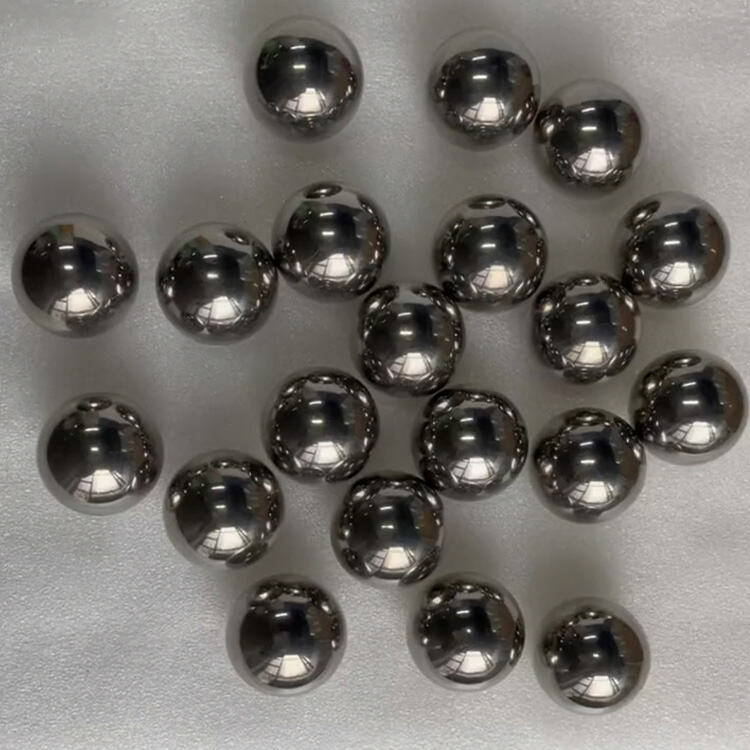
The decision to invest in titanium balls reflects a strategic understanding of total cost of ownership and operational reliability. While titanium balls require higher upfront capital investment compared to conventional materials, they eliminate the hidden costs associated with corrosion damage, downtime, maintenance interventions, and premature component failure. Organizations that prioritize long-term performance and system integrity find that titanium balls deliver measurable financial and operational advantages over their product lifecycle.
Superior Material Properties of Titanium Balls
Corrosion Resistance in Demanding Environments
Titanium balls exhibit exceptional corrosion resistance due to the formation of a stable oxide layer on their surface, known as the passive film. This naturally occurring protective barrier prevents chemical attack from aggressive acids, alkaline solutions, saltwater, and organic solvents. The corrosion resistance of titanium balls remains consistent across a wide temperature range, making them suitable for both cryogenic and elevated-temperature applications. In chemical processing environments where corrosive media contact ball components daily, titanium balls maintain their dimensional integrity and surface finish far longer than competitive materials.
Strength-to-Weight Ratio Advantages
Titanium balls combine high tensile strength with remarkably low density, delivering mechanical properties that conventional materials cannot match. This favorable strength-to-weight ratio means that titanium balls perform demanding load-bearing functions while remaining significantly lighter than steel alternatives. For aerospace and precision machinery applications, reduced weight directly translates to improved fuel efficiency, reduced structural stress, and enhanced system performance. The exceptional strength of titanium balls ensures they withstand mechanical shock, vibration, and cyclical loading without deformation or surface degradation that would compromise application reliability.
Industrial Applications Where Titanium Balls Excel
Chemical Processing and Petrochemical Operations
Chemical processing facilities demand materials that can withstand exposure to corrosive media without failing or contaminating products. Titanium balls serve as critical components in pump systems, agitation equipment, and valve assemblies where contact with aggressive chemicals is constant. The corrosion resistance of titanium balls prevents chemical attack that would corrode standard steel components, eliminating product contamination risks and maintaining system integrity. Processing facilities that implement titanium balls report significant reductions in equipment downtime, emergency maintenance events, and unplanned production interruptions.
Marine and Offshore Engineering
Marine environments present relentless corrosion challenges due to saltwater exposure, dissolved oxygen, and natural electrochemical processes that attack standard materials. Titanium balls thrive in these conditions because their corrosion resistance transcends the limitations of traditional stainless steel and protective coatings. Offshore drilling platforms, subsea equipment, desalination systems, and marine propulsion components increasingly incorporate titanium balls to eliminate corrosion-related failures. The extended service life of titanium balls in saltwater environments justifies the material investment by preventing catastrophic equipment failures in remote locations where replacement costs and safety risks multiply exponentially.
Design Considerations and Implementation Strategies
Selecting Appropriate Titanium Ball Specifications
Successful implementation of titanium balls requires careful alignment between material grade, diameter, surface finish, and application requirements. Different titanium alloys exhibit varying corrosion resistance profiles, mechanical properties, and cost structures, making grade selection a critical decision point. Factors including temperature extremes, chemical composition of surrounding media, required precision tolerances, and loading conditions all influence which titanium balls best serve specific applications. Engineers must evaluate whether commercially pure titanium provides sufficient corrosion resistance or whether specialty alloys like titanium-molybdenum or titanium-palladium offer superior performance for particular chemical environments.
Cost-Benefit Analysis and Long-Term Value Proposition
While titanium balls command higher purchase prices than steel or aluminum alternatives, their extended operational lifespan and elimination of premature failure costs create compelling financial justification. Organizations conducting rigorous cost-benefit analysis typically discover that titanium balls reduce total cost of ownership by minimizing replacement frequency, reducing emergency maintenance interventions, and preventing collateral damage from equipment failure. The predictable performance and extended service intervals of titanium balls improve operational planning accuracy and reduce budget uncertainty compared to materials requiring frequent replacement cycles. Facilities operating in corrosive environments increasingly view titanium balls not as a premium cost but as an essential investment in system reliability and operational continuity.
FAQ
Why do titanium balls resist corrosion better than stainless steel?
Titanium balls develop a naturally occurring passive oxide film that provides superior protection against chemical attack compared to stainless steel. While stainless steel relies on chromium content to create its passive layer, titanium forms an even more stable and self-healing protective barrier. The passive film on titanium balls remains intact across a wider range of pH levels and chemical conditions, making these components suitable for aggressive environments where stainless steel would experience pitting corrosion or stress corrosion cracking. The exceptional stability of the oxide layer on titanium balls explains their superior performance in both acidic and alkaline chemical solutions.
Can titanium balls be used in extreme temperature applications?
Titanium balls perform exceptionally well across extreme temperature ranges, maintaining their corrosion resistance and mechanical properties in both cryogenic and high-temperature environments. At extremely low temperatures, titanium balls remain ductile and resistant to brittle fracture, unlike some alternative materials that become brittle in cold conditions. At elevated temperatures, the corrosion resistance of titanium balls remains stable because the protective oxide layer does not degrade as readily as protective coatings on conventional materials. This temperature stability makes titanium balls ideal for applications involving thermal cycling or sustained exposure to extreme heat, such as aerospace engines, industrial heat exchangers, and specialized processing equipment.
What maintenance requirements apply to titanium balls in service?
Titanium balls require minimal maintenance compared to conventional materials because their corrosion resistance eliminates the need for protective coatings or corrosion inhibitor treatments. Routine inspection and cleaning with appropriate solvents preserve the performance of titanium balls throughout their operational lifespan. Unlike steel components that require regular lubrication, coating renewal, or corrosion monitoring, titanium balls deliver consistent performance with standard maintenance protocols. Organizations implementing titanium balls in corrosive applications report that material-related maintenance costs represent a minimal portion of their total operating expenses compared to facilities using traditional materials.